

30–45 Minute Panikeke: Metric Measures and NZ Pantry Swaps
Panikeke are Samoan round fritters made from flour, sugar, baking powder, and a liquid, fried until golden outside and soft inside. This recipe delivers a proper batch of light, fluffy panikeke in about 30 to 45 minutes, with both a plain version and a banana version covered. A pantry-friendly mix option sits further down for the nights you want the same result without the mixing bowl.
TL;DR:
- Using a deep oil temperature of 170 to 180°C is crucial to prevent greasy fritters and ensure a fluffy, golden exterior.
- Adjust batter size and frying time carefully for banana variants, as extra moisture requires smaller portions and longer cooking to avoid raw centers.
- A simple mix option with pre-measured ingredients can be used for convenience, but it may produce slightly denser results compared to traditional batter.
- Frying in small batches and avoiding crowding helps maintain oil temperature and achieve evenly cooked, crisp panikeke.
- Storing cooked fritters in an airtight container for up to three days and reheating in an air fryer preserves the crispness without becoming chewy.
Table of Contents
- Panikeke recipe ingredients and easy pantry swaps
- How to make panikeke: step-by-step frying method
- Banana panikeke and other batter variations
- How to serve panikeke: traditional and modern ideas
- Storing and reheating panikeke without losing the crunch
- Common panikeke problems and how to fix them
- Why Missy Lala shares this recipe
- A family cook’s take on panikeke
- Missy Lala baking mix: an honest shortcut for busy nights
- Sources
- FAQ
Panikeke recipe ingredients and easy pantry swaps
Panikeke started as a simple fritter built from whatever flour, sugar, and fat a household had on hand, and that flexibility is still the dish’s biggest strength. The ingredient base described across Samoan recipe sources is short: self-raising flour, sugar, baking powder, salt, and a liquid, deep-fried until golden.
For a batch of around 12 fritters:
- 2 cups (300g) plain flour, or self-raising flour if you want to drop the baking powder
- 2 tablespoons (25g) sugar
- 2 teaspoons baking powder (skip if using self-raising flour)
- ½ teaspoon salt
- 1 cup (250ml) water or milk
- 1 egg (optional, gives a slightly richer crumb)
- 2 ripe bananas, mashed, for banana panikeke
- Oil for deep-frying (vegetable, canola, or rice bran all work)
Swap dairy milk for water or coconut water if you’re avoiding dairy, and use a 1:1 gluten-free flour blend if needed, though the texture turns slightly denser. Some family versions, like the panikeke waicala variant, use just flour, water, sugar, and salt, proof that this dish never demanded a long shopping list.
How to make panikeke: step-by-step frying method
Getting the batter and the oil right matters more than any exact ingredient ratio. Follow this order and you’ll avoid the two most common failures: raw centres and greasy shells.
- Mix dry ingredients first. Whisk flour, sugar, baking powder, and salt in a large bowl.
- Add the liquid gradually. Pour in water or milk (and egg, if using) while stirring, until the batter is thick but pourable, similar to a pikelet batter. It should hold its shape briefly on a spoon before slowly sinking back.
- Heat the oil. Pour oil to about 5cm depth in a heavy pot or deep fryer. Aim for 170 to 180°C. Without a thermometer, drop a small pinch of batter in: it should sizzle and rise within a couple of seconds, not sit still or turn brown instantly.
- Drop the batter. Use two spoons, one to scoop and one to nudge the batter off, dropping fritters gently near the oil’s surface rather than from height, which limits splashing according to Grove Farm’s traditional recipe notes.
- Fry in small batches. Cook four to five at a time so the oil temperature doesn’t drop. Fry for around two to three minutes per side, turning once the underside is golden brown.
- Test doneness. Poke a toothpick into the centre of one fritter. If it comes out with wet batter clinging to it, fry a little longer at a slightly lower heat.
- Drain and rest. Lift onto a wire rack or paper towel for a minute before serving, letting excess oil drip away rather than pool underneath.
Pro Tip: If your first batch browns too fast on the outside but stays raw in the middle, your oil is running hot. Drop the heat by 10 to 20°C and fry smaller portions rather than fewer, larger ones. It’s the single most useful fix in the whole recipe.
Banana panikeke and other batter variations
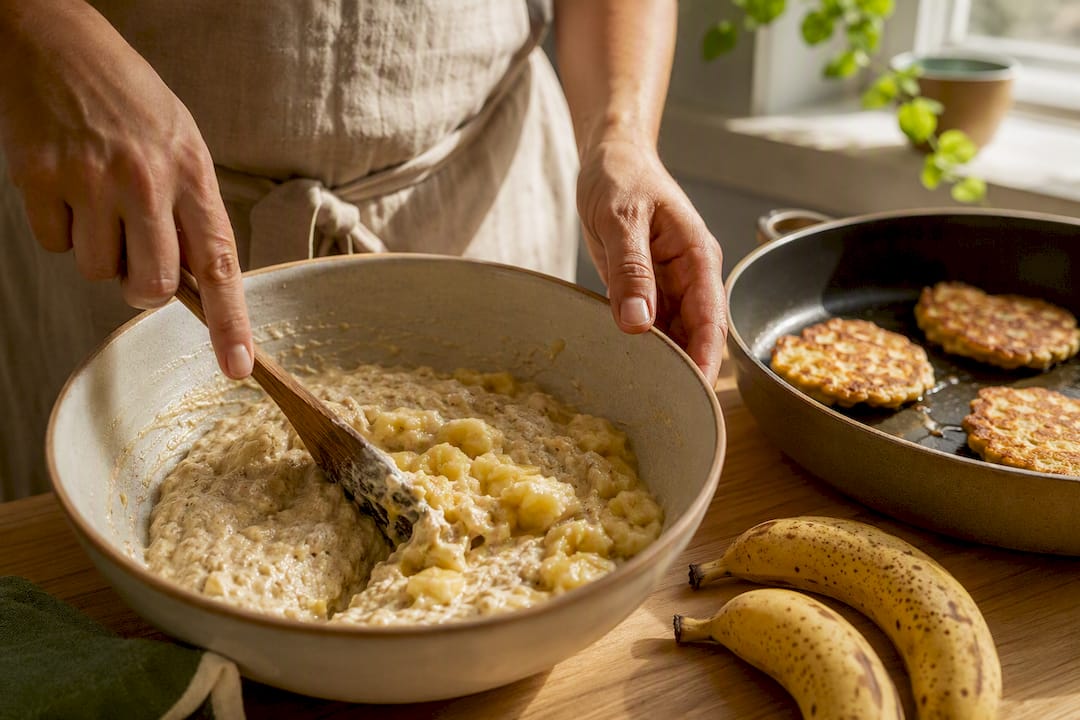
Banana panikeke is the most popular variant, and for good reason: mashed banana adds natural sweetness and moisture, so you can cut back the added sugar. Fold two mashed overripe bananas into the base batter and expect it to loosen slightly, since banana adds extra hydration that changes how the fritter cooks.
Because banana batter holds more moisture, make your scoops slightly smaller and give them 30 seconds longer per side to cook through properly. A thicker batter (less liquid) gives you a puffier, more cake-like fritter, while a thinner batter spreads flatter and crisps faster, closer to a pikelet. Samoan cooks regularly personalise the base recipe with a splash of vanilla, a pinch of cinnamon or nutmeg, or grated sweet potato for an earthier version. If you’d rather skip deep-frying altogether, a well-oiled air fryer at 180°C for around eight minutes gives a lighter, less crisp result worth trying once for comparison.
How to serve panikeke: traditional and modern ideas
Panikeke are traditionally paired with koko Samoa (Samoan cocoa) for breakfast, or simply dusted with icing sugar while still warm. Cultural food references note that both plain and banana versions are usually eaten fresh as a snack or with tea, rather than plated as a formal dessert.
For gatherings, a few presentation choices go a long way:
- Stack fritters on a platter lined with banana leaf or a woven placemat for a traditional touch.
- Serve with jam, honey, or golden syrup on the side for dipping.
- Offer a savoury option too: a light dusting of salt with a squeeze of lime suits banana-free panikeke well.
- Portion for parties at two to three fritters per person, since they’re rich and filling.
Storing and reheating panikeke without losing the crunch
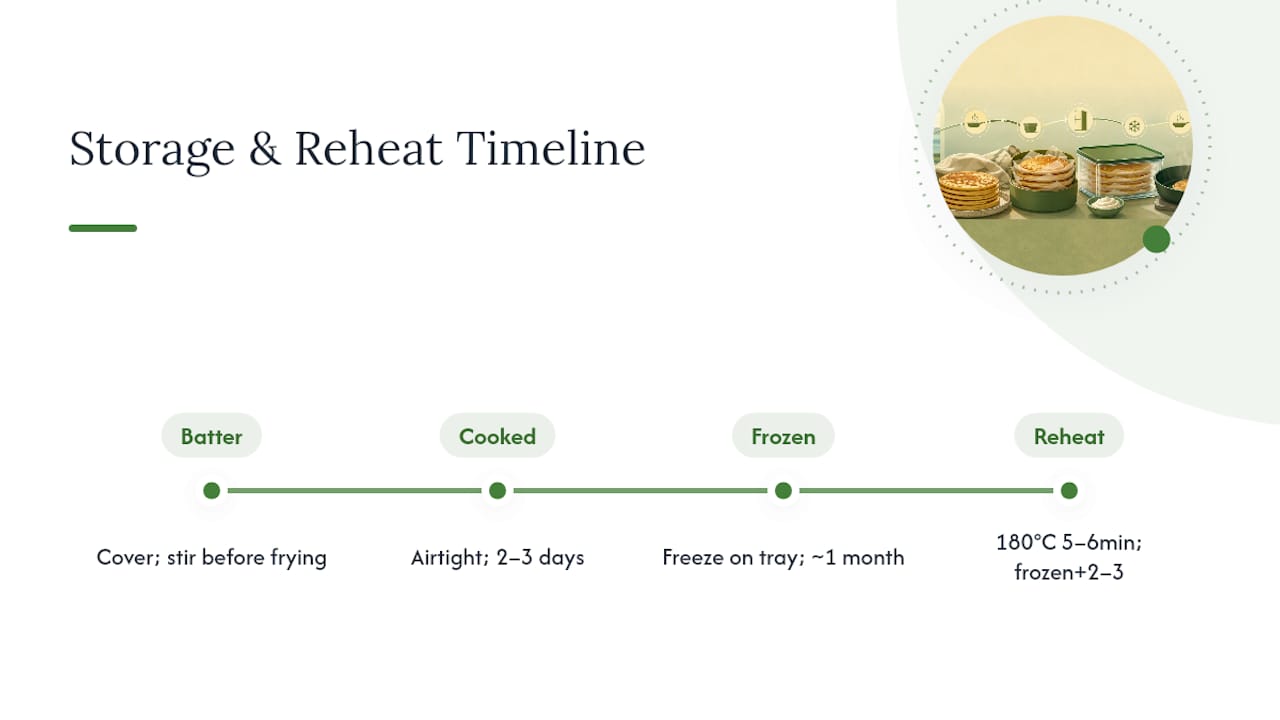
Panikeke batter can sit covered in the fridge for up to 24 hours, though it’s worth giving it a light stir before frying since baking powder settles. Don’t leave it out at room temperature for more than an hour or so once mixed.
Cooked fritters keep in an airtight container for two to three days in the fridge. Reheat in an oven or air fryer at 180°C for five to six minutes to bring back the crisp shell. Microwaving works in a pinch but leaves them soft and slightly chewy. For longer storage, freeze cooled fritters flat on a tray, then bag them once solid. They’ll hold for about a month and reheat straight from frozen in the air fryer, adding two or three extra minutes.
Common panikeke problems and how to fix them
Most panikeke failures trace back to oil temperature or fritter size, not the recipe itself.
- Raw middle: Make fritters smaller and drop the oil temperature slightly, then confirm with the toothpick test before pulling the whole batch.
- Greasy or oily fritters: Oil is likely too cool, letting the batter soak instead of seal. Bring it back to 170 to 180°C and avoid crowding the pot, which drops the temperature fast.
- Uneven shape or browning: Use the two-spoon method for consistent scoop sizes, and turn each fritter only once it’s genuinely golden underneath, not on a timer alone.
Pro Tip: Keep a small dish of water nearby to dip your scooping spoon between drops. Wet batter releases far more cleanly than dry batter, which is half the battle for even, round fritters.
Why Missy Lala shares this recipe
Missy Lala’s Cook Islands Donut Baking Mix grew out of the same island kitchen tradition panikeke comes from, built to simplify home baking so families can pull together authentic island-style donuts in under an hour. The same mix shows up in Missy Lala’s take on Cook Islands donuts and in recipes for fried bread, reflecting a brand built around preserving heritage recipes rather than replacing them.
A family cook’s take on panikeke
Panikeke belongs at the messy end of the kitchen table, not the polished centrepiece. In most homes I’ve seen cook them, panikeke show up when people gather, not when they’re trying to impress anyone. Hand a kid the second spoon and let them drop the batter. It’s the easiest way to get small hands genuinely involved, and nobody minds if the shapes come out lopsided.
— Jasmin
Missy Lala baking mix: an honest shortcut for busy nights
A baking mix can be a convenient alternative for nights when the traditional method isn’t feasible, working similarly to panikeke batter at its core.
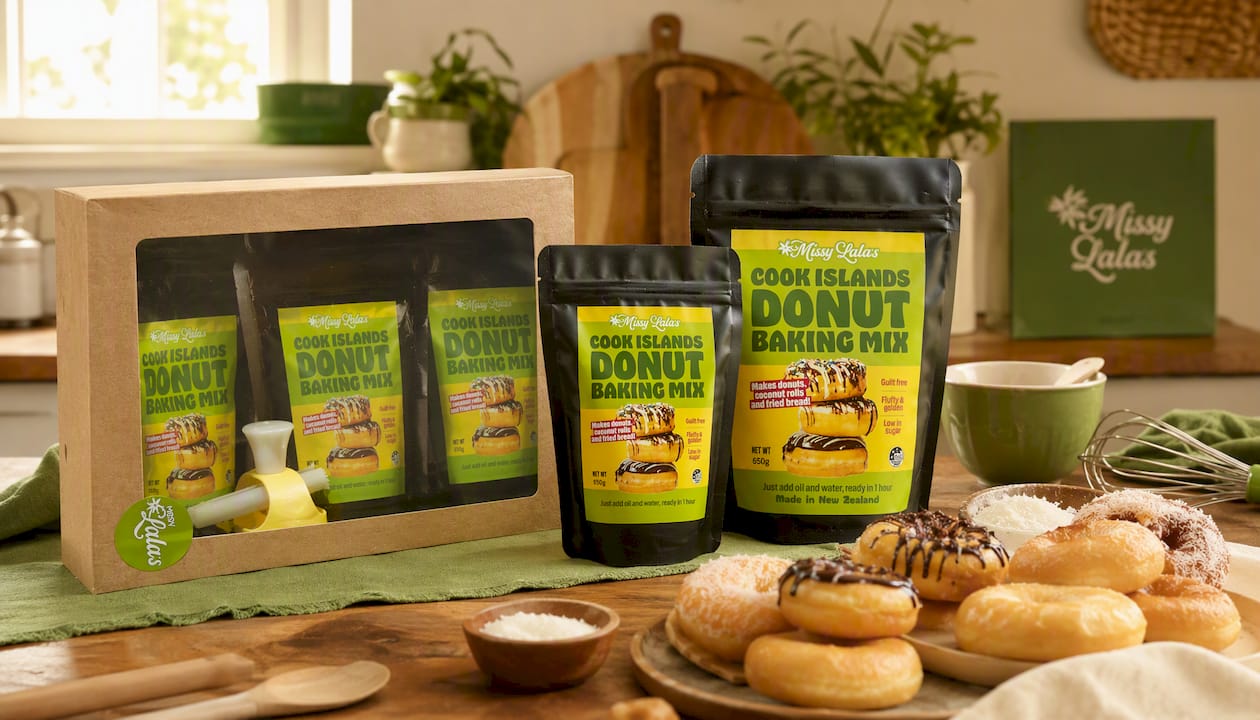
To use it for panikeke, swap the dry ingredients (flour, sugar, baking powder, salt) for the mix’s recommended amount, then add water and oil as directed on the pack, easing back slightly on liquid if you’re folding in mashed banana. Fry one test fritter first to check the batter’s consistency before committing the whole batch to the pot. The Cook Islands Donut Baking Mix in 250g suits a single family batch, while the 650g pack covers bigger gatherings without a second trip to the pantry. If you’re setting up island baking as a regular thing at home, the Island Memories Bundle pairs the mix with the recipes and extras to get started properly. Grab a pack and see how it compares against your own batter next time you’re short on time.
Sources
- Samoan panikeke recipe | Polynesian Cultural Center blog
- Panikeke Recipe – History, Tips & Serving Ideas | The Koko Samoa
- Samoan panikeke | Allrecipes
- Samoan pankeke | Grove Farm
FAQ
How do you make panikeke?
Mix flour, sugar, baking powder, and salt, stir in water or milk until you get a thick, pourable batter, then deep-fry spoonfuls in oil heated to around 170 to 180°C until golden on both sides.
What is the 3:2:1 rule for pancakes?
This ratio (three parts flour, two parts liquid, one part egg) applies to Western-style pancake batter, not traditional panikeke, which uses a thicker, egg-optional batter closer to a fritter than a pancake.
How do you make Samoan flat pancakes?
Flatter, pancake-style panikeke use a thinner batter, made by adding slightly more liquid than the standard recipe, then frying with less oil in a pan rather than deep-frying, giving a crisper, less puffy result.
Can I use a baking mix instead of the full recipe?
Yes. Missy Lala’s Cook Islands Donut Baking Mix can stand in for the dry ingredients, following the pack’s water and oil ratio, though the traditional method above remains the fuller, more customisable version.
Why are my panikeke greasy instead of fluffy?
Greasy fritters usually mean the oil wasn’t hot enough when the batter went in, letting it soak up oil instead of sealing. Keep the oil at 170 to 180°C and avoid overcrowding the pot.


