

3 Fast No Yeast Pizza Bases for Weeknights, Missy Lala Shortcut
A baking powder dough gets you from mixing bowl to oven in about 20 minutes, using flour, baking powder, salt, oil and water. The result is a thin, crisp, flatbread-style base rather than the airy chew of yeasted dough. A yoghurt and self-rising flour version works almost as fast with just two ingredients. Both skip proofing entirely.
TL;DR:
- Baking powder dough can be ready and baked within 20 minutes, ideal for quick weeknight pizza without proofing time.
- Using self-rising flour and Greek yoghurt simplifies the process further, eliminating the need for additional leavening agents.
- Preheating the oven and tray to 230-250°C is crucial for achieving a crisp base rather than a soft, steamed crust.
- Rolling the dough thinner than 6 millimeters and docking the surface prevents dense texture and large air pockets.
- Missy Lala’s baking mix offers a convenient shortcut, requiring only mixing with water and oil, suited for fast, easy pizza bases.
Table of Contents
- Ingredients for baking powder and yoghurt pizza bases
- How to mix, rest and bake a no-yeast pizza base
- Getting a crisp base instead of a soft, doughy one
- Two-ingredient, single-serve and gluten-free swaps
- Fixing sticky dough, dense crusts and short-lived leftovers
- How Missy Lala’s baking mix fits into quick pizza night
- Try the Cook Islands Donut Baking Mix as a pizza-night shortcut
- Sources
- FAQ
Ingredients for baking powder and yoghurt pizza bases
The classic baking powder method uses 350 g plain flour, 2¾ teaspoons baking powder, 1 teaspoon salt, 1 tablespoon oil and 170 ml water, enough for two pizzas. A near-identical version for family cooking uses 2½ cups flour, 3 teaspoons baking powder, 1 teaspoon salt, 1 tablespoon oil and about 1 cup water.
The two-ingredient route swaps chemistry for convenience: about 1 cup (136 g) flour and ¾ cup Greek yoghurt make one personal pizza base. For a single serve using the baking powder method, a smaller formula works too.
- Baking powder method: 350 g plain flour, 2¾ tsp baking powder, 1 tsp salt, 1 tbsp oil, 170 ml water.
- Yoghurt and self-rising flour: 1 cup flour, ¾ cup Greek yoghurt, no extra leavening needed if using self-rising flour.
- Single serve: roughly a third of the standard batch, adjusted to taste.
Plain flour works fine for either method. Bread flour adds a touch more structure but is not necessary. Milk can replace some or all of the water in the baking powder method for a softer crumb.
How to mix, rest and bake a no-yeast pizza base
Whisk the dry ingredients together first so the baking powder disperses evenly and does not clump in one corner of the dough.
- Combine flour, baking powder and salt in a bowl and whisk well.
- Add oil and water, then mix until a rough dough forms.
- Knead by hand for 1 to 3 minutes, or blitz in a food processor for about 40 seconds until smooth.
- Rest the dough for 5 to 10 minutes. This short pause relaxes the gluten so it rolls out without springing back.
- Divide into portions and roll each one thin, aiming for around 6 millimetres or fewer.
- Prick the surface with a fork (docking) to stop large air pockets forming during baking.
- Transfer to a preheated tray or pizza stone and add toppings.
- Bake at high heat for 12 to 15 minutes, or until the base is golden and firm underneath.
A food processor cuts hand-kneading time dramatically, which matters most on a weeknight when every minute counts. For a crisper result, bake the bare base alone for 5 minutes before adding toppings, then finish baking once dressed.
Pro Tip: Roll the dough on a lightly floured bench rather than in the bowl. It stops sticking without needing extra flour worked into the dough itself.

Getting a crisp base instead of a soft, doughy one

The oven setup matters as much as the recipe. Preheat the oven and the tray or stone together to 230 to 250°C so the base hits a hot surface the moment it goes in. A cold tray steams the bottom of the dough instead of crisping it.
Chemical leaveners like baking powder do not create the stretch and bubble structure yeast does, so thickness does the work that fermentation normally handles. Roll thinner rather than thicker, and always dock the surface before baking.
- Preheat the tray or stone for at least 10 minutes before the dough goes on.
- Brush the exposed edges with oil before baking for better colour and a slightly crisper bite.
- Keep toppings light and avoid watery sauces that can pool in the centre.
Mixing to table takes about 20 minutes for a baking powder base, which is roughly a third of the time a yeasted dough needs once proofing is factored in.
Two-ingredient, single-serve and gluten-free swaps
The Greek yoghurt and self-rising flour combination is the simplest swap going, since self-rising flour already contains the leavening and salt a baking powder recipe adds separately. Higher-fat yoghurt gives a softer, more yoghurt-forward crust, while low-fat yoghurt bakes up crisper.
- Self-rising flour and Greek yoghurt in roughly equal parts by volume make a workable two-ingredient dough.
- If using plain flour instead of self-rising, add baking powder and salt back in by hand.
- A single-serve version uses about two-thirds of a cup of flour with a splash of milk or water and a spoon of oil, enough for one personal pizza.
- Gluten-free self-raising flour blends can replace wheat flour, though the base tends to be more crumbly and benefits from a slightly thicker roll.
Single portions cook well in a hot pan on the stovetop if the oven is not preheated, giving a similar crisp base in under 10 minutes.
Fixing sticky dough, dense crusts and short-lived leftovers
Sticky dough usually means too much liquid relative to flour. Add flour a tablespoon at a time until it comes together without clinging to your hands. Dry, crumbly dough needs the opposite fix: a teaspoon of water at a time, worked in gently.
A dense, cakey centre almost always means the base was rolled too thick. Since there is no yeast to lighten the crumb, rolling thinner is the main lever available. Par-baking the bare crust for a few minutes before topping also helps if the centre still comes out soft.
- Add flour or water in small increments and knead briefly between additions.
- Roll thinner if the finished base feels dense rather than crisp.
- Wrap unused dough tightly in plastic and refrigerate, using it within 24 to 48 hours.
- Reheat leftover pizza in a hot oven or dry pan rather than a microwave to bring back some crispness.
How Missy Lala’s baking mix fits into quick pizza night
Missy Lala’s Cook Islands Donut Baking Mix was built for one job: turning water and oil into something warm and doughy without the guesswork. That same simplicity carries over reasonably well to a quick pizza base, since the mix already balances flour and leavening the way a baking powder dough recipe does by hand.
The 250g pack suits a single cook or one small pizza night. Families cooking for a crowd, or wanting enough mix on hand for a few weekend projects, tend to reach for the 650g or 1300g sizes. Our technique guide on mixing and hydration covers the same basic handling principles that apply here: measure carefully, hydrate evenly, and do not overwork the dough.
— Jasmin
Try the Cook Islands Donut Baking Mix as a pizza-night shortcut
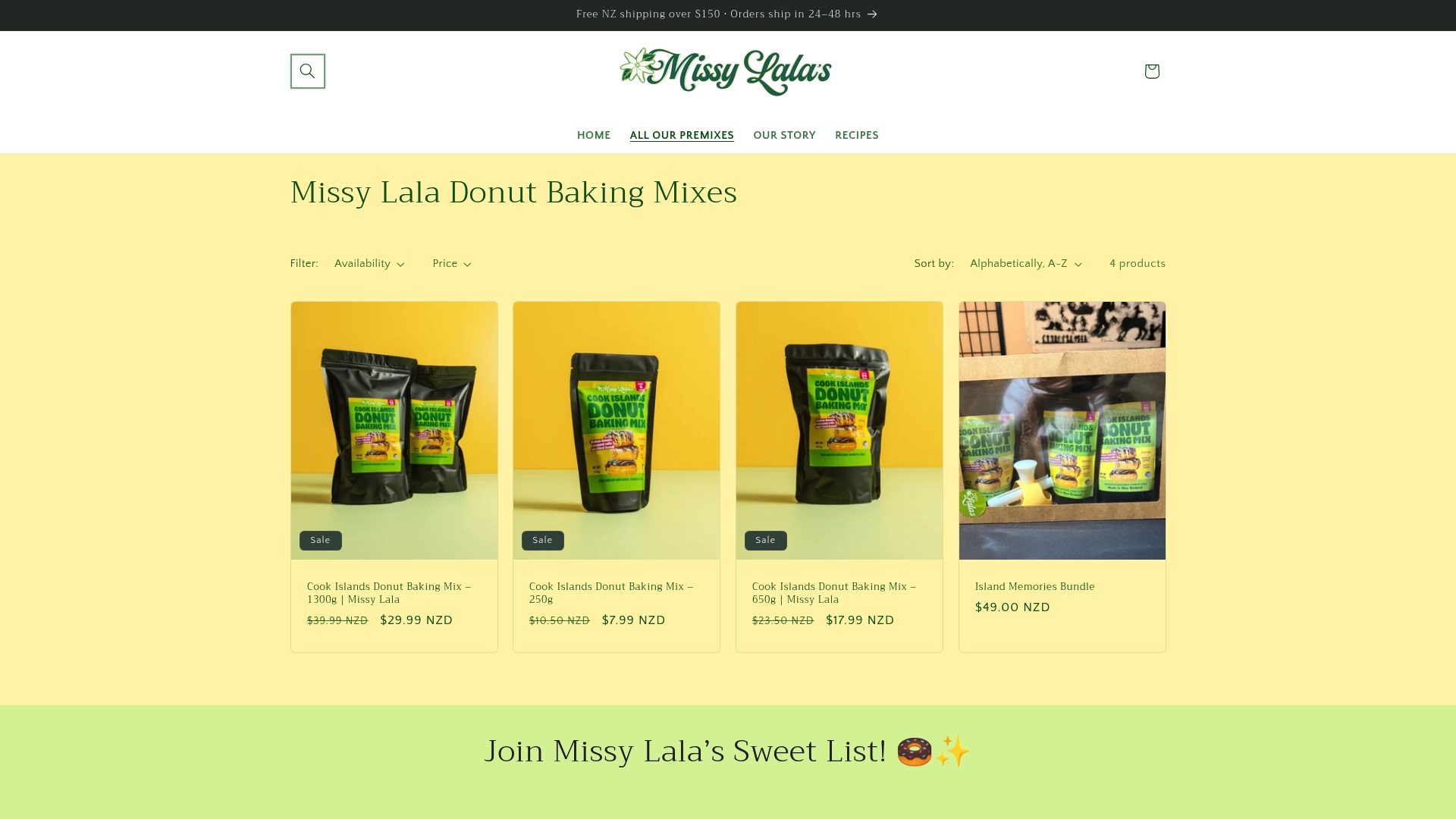
If measuring out baking powder and salt from scratch feels like one more job on a busy night, Missy Lala’s mix takes that step off your plate. It is formulated with water and oil in mind, so turning a batch into a quick pizza base is a matter of mixing, a short knead, and rolling thin before it goes on a hot tray.
- Measure the mix, add water and oil as directed, and knead briefly until smooth.
- Roll thin rather than thick, the same rule that applies to any no-yeast base.
- Choose the 250g pack for occasional use or the Island Memories Bundle for a full family baking session.
Browse the full Cook Islands Donut Baking Mix range to find the size that fits your kitchen.
Sources
- No yeast pizza dough | BBC Good Food
- An excellent NO YEAST Pizza Dough! - RecipeTin Eats
- No-rise pizza dough recipe | Simply Recipes
- No-yeast pizza dough | Arla Foods
FAQ
Is it possible to make a pizza base without yeast?
Yes. Baking powder or a mix of Greek yoghurt and self-rising flour both raise the dough without any proofing time. The base comes out thinner and crisper than a yeasted crust, more like a flatbread than a chewy pizzeria-style base.
How do you make a quick pizza base?
Mix plain flour, baking powder, salt, oil and water into a rough dough, knead briefly, rest it for a few minutes, then roll thin and bake on a hot tray. The whole process from mixing to table takes about 20 minutes.
What are the ingredients in a three-ingredient no-yeast pizza dough?
A common version uses just flour, baking powder and salt as the dry base, with oil and water added to bring it together. Some versions simplify further to self-rising flour and Greek yoghurt, since the flour already contains the leavening.
What is a well-known three-ingredient no-yeast pizza dough recipe?
Definitions vary across recipe sources, but most three-ingredient versions rely on self-rising flour, Greek yoghurt and a pinch of salt, or a flour, baking powder and water combination. Both approaches skip yeast entirely and are ready to roll within minutes of mixing.
Can Missy Lala’s baking mix be used for a pizza base?
Missy Lala’s Cook Islands Donut Baking Mix is designed to be mixed with water and oil, and its flour-and-leavening balance can be adapted to a quick pizza base using the same thin-roll, hot-tray approach as any no-yeast dough. It is sold in 250g, 650g and 1300g packs depending on how much you plan to bake.


