

Make Cake Donuts in Under an Hour: Yeast vs Cake Donuts for Home Bakers
Yeast donuts get their lift from live yeast, which makes them light, airy and chewy. Cake donuts rely on baking powder or baking soda, which makes them denser, more tender and crumbly. Look for a taller, uneven shape with a honeycomb interior for yeast donuts; cake donuts sit flatter, with a tighter crumb and often a cracked, craggy surface. Prep time and typical uses split the same way, and both have their place on the bench.
TL;DR:
- Yeast donuts typically take longer to prepare, often around three hours, due to the need for proofing and gluten development.
- Cake donuts are ready much faster, often in under an hour, since they skip the proofing step and rely on chemical leaveners.
- Yeast donuts have a taller, uneven shape with a honeycomb interior, whereas cake donuts sit flatter with a crisper, cracked exterior.
- Filled donuts, such as those with custard or jam, are almost exclusively made with yeast, which allows easier filling through the pliable dough.
- Cake donuts last longer at room temperature, remaining fresh for one to two days, while yeast donuts tend to dry out or toughen within hours.
Table of Contents
- Yeast donuts vs cake donuts: the leavening science behind the split
- Texture and mouthfeel: what to expect when you bite
- Flavour, fillings and finishing: where each style shines
- How they’re made and timing: what a baker actually does
- Which to choose? A quick decision guide for buyers and bakers
- Practical baking notes from Missy Lala: improving freshness and using a baking mix
- Typical shelf life and freshness differences
- Common varieties and examples of each type
- Perspective: why preference is personal
- Product spotlight: Missy Lala Cook Islands Donut Baking Mix
- Sources
- FAQ
Yeast donuts vs cake donuts: the leavening science behind the split
The core difference between cake and yeast donuts comes down to what makes the dough rise. Yeast donuts use a living organism that ferments sugars in the dough, releasing carbon dioxide and a handful of flavour compounds you can’t get any other way. Cake donuts skip that biological step entirely and use baking powder or baking soda, chemical leaveners that only start producing gas once they hit moisture and heat.
That difference in mechanism changes everything downstream. Yeast dough needs kneading and proofing time to build a strong gluten network, the elastic web of proteins that stretches around the CO2 bubbles yeast produces and holds them in place rather than letting them escape. A chemistry-focused breakdown from PBS Reactions shows how those trapped gas cells expand during frying, giving raised donuts their signature open, honeycomb-like crumb.
Cake batter works the opposite way. Bakers deliberately keep gluten development to a minimum, because too much elasticity would toughen what’s meant to be a tender, cake-like bite.
- Yeast donuts: taller profile, open and uneven crumb, chewier bite
- Cake donuts: flatter profile, fine and even crumb, softer or crumblier bite
- Yeast donuts need rest time for gas to build without escaping
- Cake donuts fry almost as soon as the batter is mixed, since the leavening reaction only kicks off with heat
The practical upshot: yeast donuts hold their chew longer after frying, while cake donuts fry a little faster and firm up more predictably.
Texture and mouthfeel: what to expect when you bite
Bite into a yeast donut and you get a pull, almost like a soft bread roll dressed up in sugar. The crumb stretches slightly before it gives way, and that’s the gluten network doing its job. Cake donuts don’t stretch. They break cleanly, with a texture Food Republic describes as denser and more tender, sometimes with a crisp, cracked exterior on old-fashioned styles.
Frying plays a role in both. The hot oil sets a thin crust on the outside while the interior keeps cooking through, but a cake donut’s tighter batter tends to crack along the surface as it expands. That signature crackled look is a cake donut trait you won’t see on a raised one.
Pro Tip: If you’re dunking in coffee or tea, cake donuts hold their shape better because the tighter crumb resists soaking up liquid as fast as an airy yeast donut does.
Flavour, fillings and finishing: where each style shines
Cake batter is a flavour carrier. Because it’s mixed rather than kneaded, you can fold cinnamon, nutmeg, citrus zest or mashed fruit straight through the crumb, and every bite tastes the same. Yeast donuts don’t offer that same flexibility, but they make up for it with fermented flavour notes a chemical leavener simply can’t produce, and practitioner notes suggest their pliable dough is far easier to fill with custard, jam or cream.
- Cake donuts: best for spiced batters, glazes, and toppings that sit on a crisp surface
- Yeast donuts: best for injected fillings, yeasted glazes, and toppings that need a soft surface to cling to
- Powdered sugar and cinnamon sugar suit both styles equally well
- Custard and jam fillings almost always go into yeast dough, rarely into cake batter
Serve cake donuts with a strong coffee for contrast; yeast donuts pair well with milkier drinks that won’t compete with the fermented notes.
How they’re made and timing: what a baker actually does
Yeast donuts take patience. The dough gets mixed, kneaded to develop gluten, then left to proof, sometimes twice, before it’s shaped, cut and fried. Some bakeries put the whole process at around three hours from start to finish. Cake donuts skip nearly all of that waiting.
- Yeast donuts: mix dough, knead to build gluten, proof until doubled, shape, proof again briefly, fry at a controlled oil temperature.
- Cake donuts: mix batter, pipe or drop straight into hot oil, fry until golden, done.
- Oil temperature matters most for both: too cool and either style turns greasy; too hot and the outside burns before the inside cooks.
- Home shortcut: a pre-mixed batter, like a donut baking mix, skips the proofing step entirely and gets you to cake-style results in well under an hour.
The trade-off is straightforward: yeast donuts reward the wait with chew and complexity, cake donuts reward you with speed.
Which to choose? A quick decision guide for buyers and bakers
Your choice usually comes down to what you’re doing with the donut, not which one is objectively better. For dunking with coffee, pick a cake donut. For anything filled with custard, jam or cream, pick yeast. For a party where you need trays ready fast, cake wins on time alone, with active prep sometimes as short as 12 to 15 minutes against a yeast dough’s much longer proofing window.
Run through this before you buy or bake:
- How much time do you actually have, start to finish?
- Do you prefer a chewy, bread-like bite or a soft, crumbly one?
- Does the occasion call for a filling, or just a glaze and topping?
- Do you want to flavour the whole crumb, or just the surface?
- Are you baking for kids or a crowd who’ll eat it within hours, or does it need to hold overnight?
If none of that settles it, freshness and nostalgia usually do. Most people default to whichever style tastes like the donut they grew up eating.
Practical baking notes from Missy Lala: improving freshness and using a baking mix
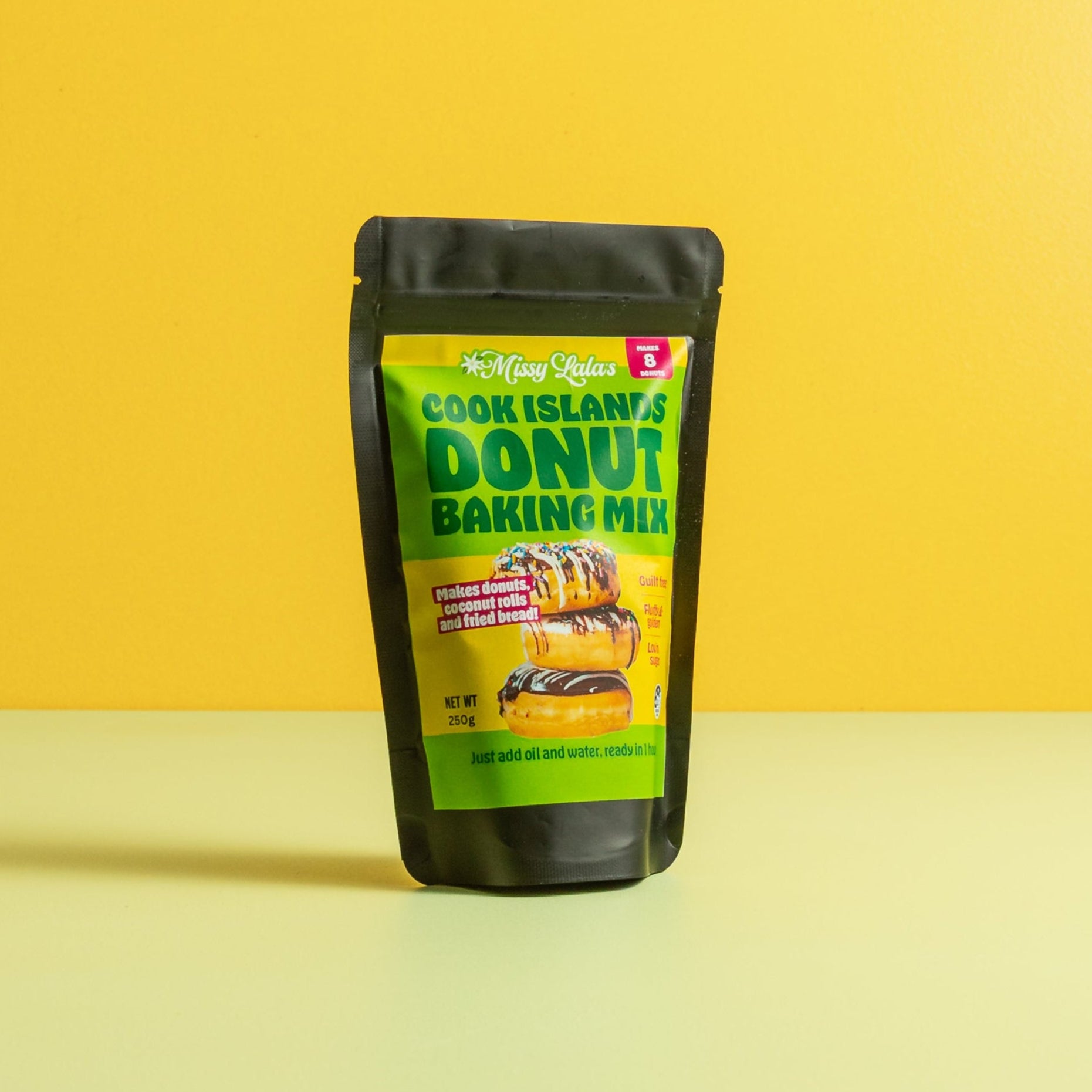
A Cook Islands Donut Baking Mix skips kneading and proofing altogether, needing only water and oil to produce a soft, cake-style fried treat in under an hour. That makes it a natural fit for cake donut territory, without the guesswork of building a batter from scratch.
Freshness comes down to timing. Glazing too early traps steam under the coating and leaves you with soggy patches, so letting donuts cool slightly before glazing matters more than most home bakers expect.
- Cool donuts on a wire rack, not a plate, to stop steam softening the base
- Glaze once the surface is warm rather than hot
- The same mix works for Māori fried bread and panekeke, useful for family baking sessions with mixed tastes
Typical shelf life and freshness differences
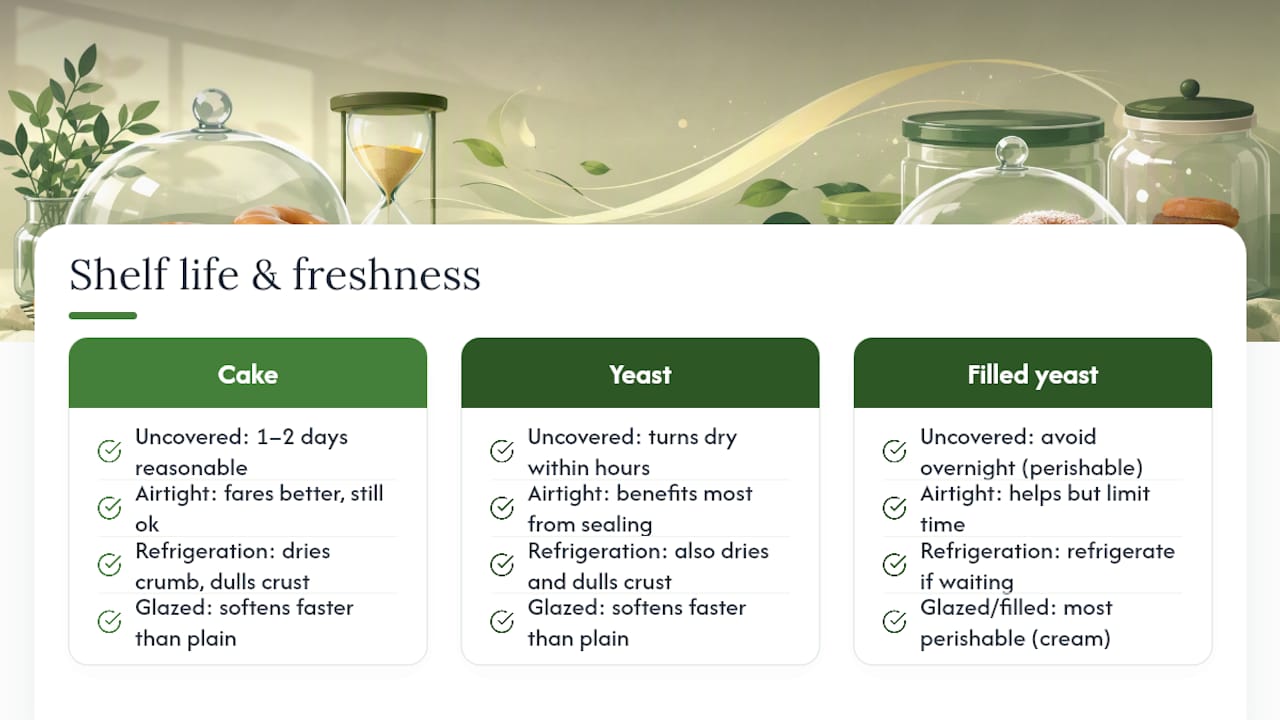
Cake donuts generally last longer on the bench than yeast donuts, because their tighter crumb holds less moisture and resists staling more slowly. Left uncovered at room temperature, a cake donut can still taste reasonable a day or two later, while a yeast donut turns dry and tough within hours of frying as the open crumb structure lets moisture escape fast.
Storage habits matter as much as the donut type. Sealed in an airtight container, both styles fare better, though yeast donuts benefit more from that protection since they’re the ones losing moisture quickest. Refrigeration tends to work against both, drying out the crumb and dulling the crust, so room temperature storage in a sealed container usually beats the fridge for either style overnight.
Glazed donuts of either type soften faster than unglazed ones, since the sugar coating pulls in ambient moisture. Filled yeast donuts are the most perishable of the lot; cream and custard fillings mean they’re best eaten the same day, refrigerated if they must wait, and never left out overnight.
If you’re baking ahead for an event, cake-style donuts made from a mix are the more forgiving option, holding their texture through a few hours of standing before serving.
Common varieties and examples of each type
Cake donuts cover a wide family. The classic old-fashioned donut, with its cracked, craggy surface, is the most recognisable, alongside cruller-style rings, cake donut holes, and heavily spiced varieties like pumpkin or apple cinnamon that rely on batter mixing to spread flavour evenly.
Yeast donuts have their own well-known lineup. The plain glazed ring is the benchmark, but the category also includes Boston cream and Bavarian cream filled donuts, jam-filled versions, Berliners, and long johns finished with icing or maple glaze. Brioche-style donuts, which lean on an enriched, buttery yeast dough, sit at the premium end of the same family.
Some styles blur the line by name alone. French crullers, for instance, use neither chemical leaveners nor yeast. They’re made from choux pastry and rely on egg for their airy structure, which is why they don’t fit cleanly into either camp despite the “cruller” name overlapping with cake-style rings in some bakeries.
Cook Islands style donuts, sometimes called kuki donuts, follow the cake donut pattern: a simple mixed batter fried in hot oil, no proofing required, which is exactly the style a donut baking mix is built to replicate at home.
Perspective: why preference is personal
Both styles have loyal fans, and neither is objectively “better.” Your coffee ritual, your kids’ patience levels, or a childhood memory of a specific bakery usually decides it before texture science ever gets a vote. Try both at home and let your own bench, not a chart, make the call.
— Jasmin
Product spotlight: Missy Lala Cook Islands Donut Baking Mix
A donut baking mix can solve the biggest barrier to home baking: complicated dough. There’s no kneading, no proofing, no guesswork, just water, oil, and a mix that gets you to soft, cake-style fried donuts in under an hour.
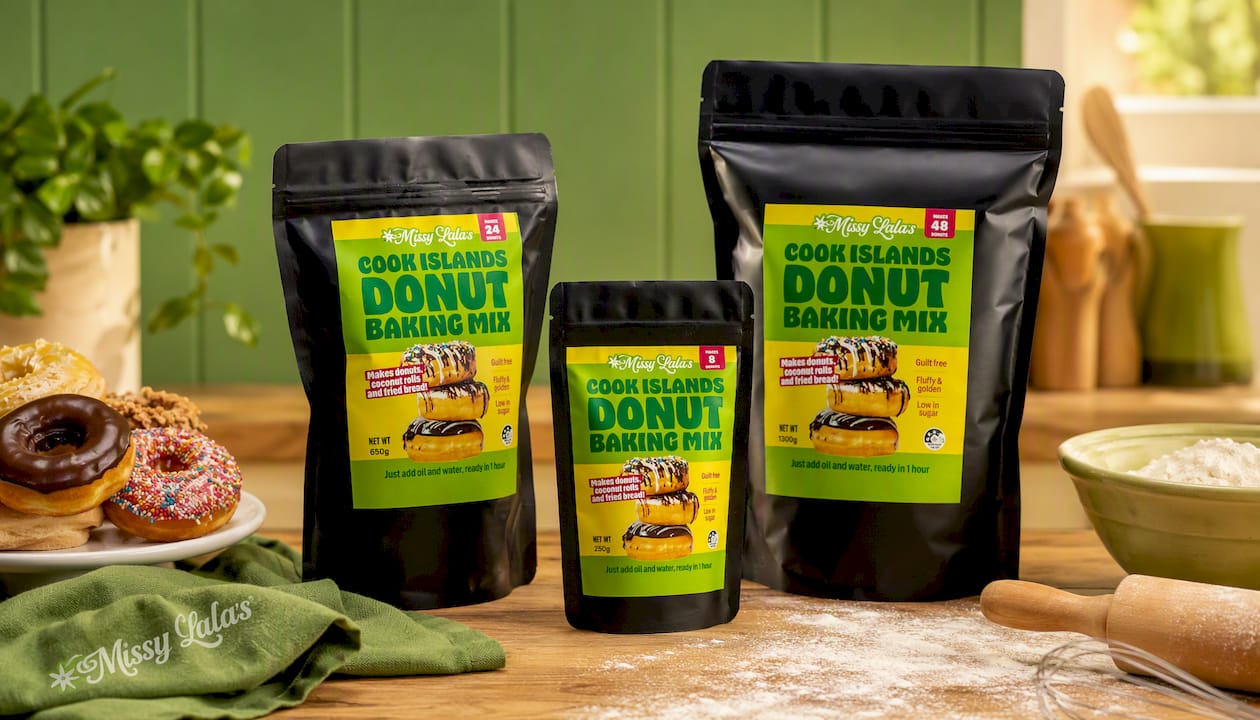
Pack sizes suit different households. The 250g pack is a low-commitment way to trial it before committing to a bigger batch. The 650g pack covers a standard family baking session, and the 1300g pack is built for parties, events, or households that bake often enough to justify buying in bulk. The same mix stretches beyond donuts too, into coconut rolls, panekeke and Māori fried bread, which makes it a flexible pantry staple rather than a one-use product.
If you’ve read this far wanting a cake-style donut without the trial and error, browse the full range of donut mixes and pick the pack size that matches how often you bake.
Sources
For the fermentation and chemistry angle, PBS Reactions and Food Republic both break down leavening clearly. For hands-on technique, America’s Test Kitchen covers gluten’s role in detail, while Missy Lala’s own baking tips ground the freshness advice in practice.
- Difference Between Cake And Yeast Donuts | Food Republic
- The Ultimate Donut Battle: Cake vs. Yeast | PBS Reactions
FAQ
Are Krispy Kreme donuts cake or yeast donuts?
Krispy Kreme’s signature original glazed donut is a yeast donut, built from a raised, proofed dough that gives it a light, airy crumb. Some of their specialty varieties use cake-style batters instead, so the answer depends on the specific product.
Are cake donuts better for you than regular donuts?
Neither style has a clear nutritional edge, since both are deep fried and typically glazed or sugared. Any difference comes down to specific recipes and portion size rather than the leavening method itself.
What is the difference between cake donuts and bread donuts?
“Bread donuts” usually refers to yeast donuts, since they’re made from an enriched, proofed dough closer to bread than to cake batter. Cake donuts use chemical leaveners and a mixed batter, giving them a denser, more crumbly texture than any bread-based donut.
Do cake donuts have yeast in them?
No, cake donuts rely entirely on chemical leaveners like baking powder or baking soda rather than live yeast. That’s the defining trait that separates them from raised donuts, and it’s also why a mix like the Cook Islands Donut Baking Mix can skip proofing entirely and still deliver a proper cake-style result.


