

12 Perfect Pani Popo Recipe: Master the Coconut Pour or Use 250g Mix
Pani popo are soft yeast buns baked in full-fat coconut cream that’s poured over the risen rolls, setting into a custardy base while the tops turn golden. Start by proofing active dry yeast in liquid at around 40°C for about 10 minutes until it foams. That step alone decides whether your dough rises properly, so get it right before anything else.
TL;DR:
- Using full-fat coconut cream is essential because its high fat content allows the sauce to set into a custardy layer, unlike light coconut milk that remains thin.
- Proper yeast activation at around 40°C and a slow, warm proofing process maximize dough rise, flavor, and texture, reducing the risk of dense or flat rolls.
- The second rise ensures the shaped dough puffs sufficiently to absorb the coconut sauce evenly without becoming dense or soggy.
- A thickened coconut sauce, cooked for five to seven minutes to achieve pouring consistency, is key to forming the signature custardy topping.
- If the tops brown too quickly, tent with foil during baking; for better results, refrigerate unbaked shapes overnight and reproof before baking.
Table of Contents
- Pani popo recipe ingredients and equipment you’ll need
- How do you make pani popo step by step?
- Pani popo recipe card: ingredients, timings, method at a glance
- Why did my pani popo turn out dense or soggy?
- Storing and reheating pani popo without losing that custardy base
- Who’s behind this pani popo recipe, and why the coconut mix helps
- Why the pouring step is the whole point
- Bake pani popo faster with a tested Cook Islands mix
- Where these techniques come from
- Sources
- FAQ
Pani popo recipe ingredients and equipment you’ll need
Before mixing anything, lay out both components: the sweet yeast dough and the coconut sauce that makes this dish what it is. Getting the ratios right here saves a lot of second guessing later.
For the dough, you’ll need:
- A typical batch of plain flour
- Active dry yeast (about one standard sachet)
- Granulated sugar
- Salt
- Warm milk or water
- Melted butter or neutral oil
- Egg, optional, for a richer crumb
For the coconut sauce:
- Full-fat coconut cream
- Sugar
- Cornstarch or plain flour
- A pinch of salt
Full-fat coconut cream is not negotiable here. The higher fat content is what lets the sauce reduce and set into that rich, custardy layer once baked, whereas light coconut milk stays thin and never quite gels the same way, according to The Koko Samoa. If you’re dairy free, coconut cream already covers you on the milk front, and coconut oil works cleanly instead of butter.
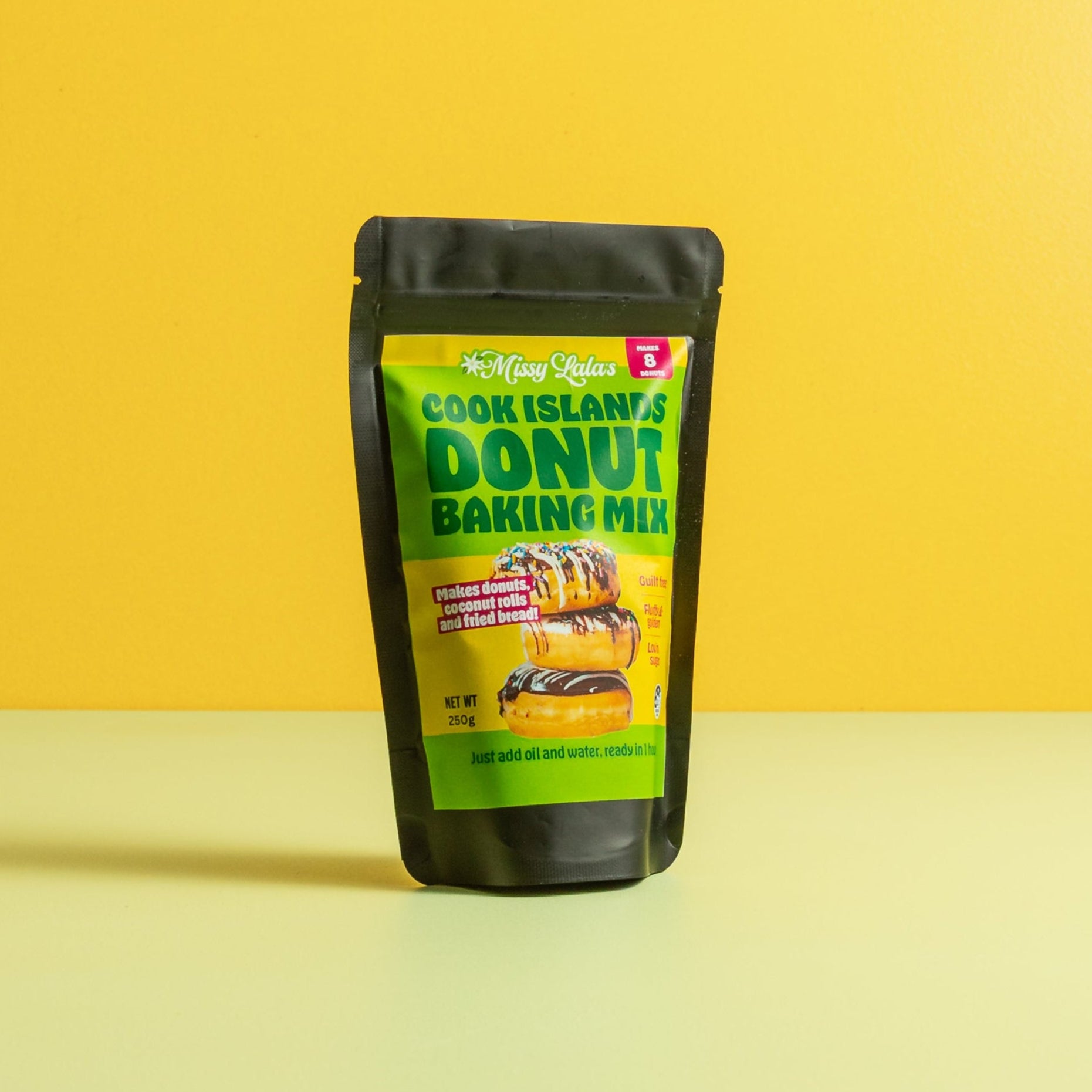
For a genuine shortcut, Missy Lala’s Cook Islands Donut Baking Mix replaces the flour, yeast, sugar and salt in one bag. You still make the coconut sauce from scratch, since that’s the part that defines the dish.
On equipment: a stand mixer with a dough hook speeds things up, but hand kneading works fine for this dough. You’ll also want a 9x13 inch baking dish, a small saucepan for the sauce, and a kitchen scale if you want the kind of consistency that separates a good batch from a great one.
How do you make pani popo step by step?
This is where technique matters more than any ingredient list. Get the timing and temperature right at each stage and the rolls come out exactly as they should: soft, golden, and sitting in a sauce that’s set rather than swimming.
1. Activate the yeast
Warm your milk or water to roughly 40°C, about the temperature of a warm bath, and stir in the sugar and yeast. Leave it for 10 minutes. It should turn foamy and slightly puffed on top. If nothing happens, the liquid was either too hot and killed the yeast, or too cold to wake it up, per the Exploratorium’s yeast temperature guidance. Don’t skip this check. Adding dead yeast to your flour wastes the whole batch.
2. Mix and knead the dough
Combine the frothy yeast mixture with flour, salt, melted butter, and egg if using. Mix until it comes together into a shaggy mass, then knead. By hand, this takes 8 to 10 minutes. In a stand mixer on low to medium speed, closer to 6 minutes. You’re looking for a dough that’s smooth, elastic, and passes the windowpane test: stretch a small piece thin enough to see light through it without tearing.
3. First rise
Place the dough in a lightly oiled bowl, cover it, and leave it somewhere warm. In a typical kitchen, expect 1 to 1.5 hours for it to double in size. Cooler kitchens can push that out to 2 hours or more. Don’t rush this by cranking the oven on for warmth. Slow, steady rising builds better flavour and texture than a fast, hot proof.
4. Shape the rolls
Punch down the risen dough and divide it into 12 even pieces, rolling each into a smooth ball. Arrange them in a greased 9x13 inch dish, leaving a little space between each one since they’ll expand again during the second rise. Twelve rolls is the standard yield for this quantity of dough, giving you a full, even tray.
5. Second rise
Cover the shaped rolls and let them proof again for 30 to 45 minutes, until they’re puffy and just touching each other. This step is more important than most home bakers realise. A properly puffed roll absorbs the coconut sauce without turning dense or waterlogged, which is exactly what the second rise is designed to prevent, per Ono Hawaiian Recipes.
6. Make the coconut sauce
While the rolls finish their second rise, combine the full-fat coconut cream, sugar, and cornstarch in a saucepan over medium heat. Whisk constantly and cook for 5 to 7 minutes, until the mixture thickens slightly, similar to the consistency of pouring cream rather than custard. You want it warm when you pour it, not scalding, and not so thick it can’t soak into the dough, a balance King Arthur Baking tests for directly in its own version of this recipe.
7. Pour and bake
Pour the warm coconut sauce evenly over the risen rolls, letting it pool around the base of each one. This is the step that makes pani popo what they are. Bake at 175°C (350°F) for 25 to 30 minutes, until the tops are golden brown and the sauce is bubbling at the edges. An instant read thermometer inserted into the centre of a roll should read around 88°C, a solid check for doneness that mirrors standard bread testing from King Arthur Baking.
Pro Tip: If the tops brown too quickly before the centres finish cooking, tent the dish loosely with foil for the last 5 to 10 minutes. This lets the inside catch up without scorching the sauce on top.
Pani popo recipe card: ingredients, timings, method at a glance
This recipe yields enough dough for a full batch of rolls, prepared and baked with appropriate timing and temperature for a soft, custardy result. Ingredients include flour, yeast, sugar, salt, liquid, fat, and optionally egg for the dough; full-fat coconut cream, sugar, thickener, and salt for the sauce.
Method checklist
- Proof yeast at 40°C for 10 minutes until frothy
- Knead until smooth and elastic (8 to 10 minutes by hand)
- First rise until doubled
- Shape into 12 balls in a greased 9x13 dish
- Second rise until puffy and touching
- Cook coconut sauce 5 to 7 minutes until slightly thickened
- Pour warm sauce over rolls and bake 25 to 30 minutes at 175°C
Why did my pani popo turn out dense or soggy?
Most problems trace back to one of three things: yeast temperature, dough hydration, or sauce thickness. Fixing all three is straightforward once you know what to check.
- Weak or no rise: your liquid was probably too hot when you added the yeast. Anything much above 40°C starts to damage it, and you won’t see the frothy activation you’re after within 10 minutes, per the Exploratorium. Start again with fresh yeast and a properly warmed liquid.
- Dense, tight crumb: the dough was likely too dry. It should feel slightly tacky, not sticky and not stiff. Add water a tablespoon at a time if it’s too firm, or a little flour if it won’t hold shape.
- Soggy bottoms: this usually means the coconut sauce was too thin, or too much was poured on. Stick to the 5 to 7 minute simmer to build proper thickness, and if the bottoms still feel wet after baking, put the dish back in on a lower oven rack for another 5 minutes, or finish briefly under the grill.
- Unsure if it’s proofed enough: press a finger gently into the dough. If the indent springs back slowly and doesn’t fully disappear, it’s ready. Trust that test over the clock, since kitchen temperature changes rising times constantly.
Pro Tip: If you’re using a frozen dinner roll shortcut, thaw the rolls fully in the baking dish itself during the first rise stage, rather than on the counter separately. This lets them settle into shape and size together, so the coconut sauce coats everything evenly later.
Storing and reheating pani popo without losing that custardy base
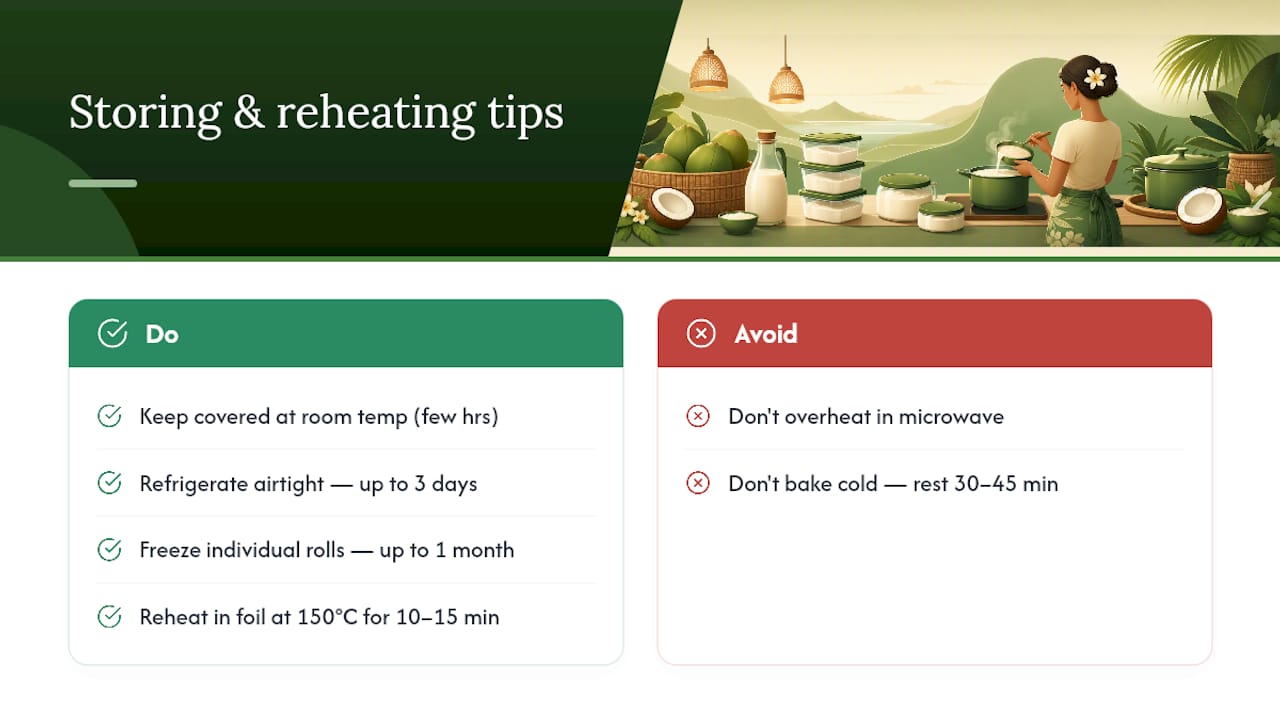
Pani popo are best the day they’re baked, but they hold up reasonably well with a bit of care. Keep leftovers covered at room temperature if you’re serving them again within a few hours.
For longer storage, refrigerate baked rolls in an airtight container for up to 3 days. To freeze, wrap individual rolls tightly and freeze for up to a month. Unbaked shaped dough also freezes well before the second rise. Thaw it in the fridge overnight, then bring it to room temperature to complete proofing before adding the sauce and baking.
To reheat, wrap rolls loosely in foil and warm in a 150°C oven for 10 to 15 minutes. This restores softness far better than a microwave, which tends to make the coconut base rubbery if you overdo it. Ten to fifteen seconds is plenty for a quick single-serve fix.
If you’d rather bake fresh in the morning, you can retard the second rise overnight in the fridge instead of finishing it at room temperature. Pull the dish out, let it come back to room temperature for 30 to 45 minutes, then proceed with the sauce and bake as normal.
Who’s behind this pani popo recipe, and why the coconut mix helps
This recipe comes from Jasmin, developed and tested through repeated batches to nail the timing on yeast activation and coconut sauce consistency specifically for home kitchens.
Getting a consistent, custardy base isn’t about luck. It’s about full-fat coconut cream, correct sauce thickness, and pouring at the right stage of the rise. That’s the technique worth learning properly, whichever way you make the dough.
For the dough itself, Missy Lala’s Cook Islands Donut Baking Mix offers a tested shortcut. One 250g bag roughly matches the dough quantity in this recipe, needing only water and oil added, which trims prep time without touching the coconut sauce step that makes pani popo what it is. The mix is a convenience for the dough, never a substitute for the cultural technique that defines the dish.
Why the pouring step is the whole point
Family gatherings in our house always had something baking, and pani popo turning up meant people were staying a while. That’s the role this dish plays in Polynesian hospitality: equally at home at breakfast, afternoon tea, or laid out for a crowd, as The Koko Samoa notes of its place in shared meals.
What makes it pani popo, rather than just coconut bread rolls, is the pour. Warm cream over risen dough, not raw dough, not finished rolls. Get that timing right and you’ve made the dish properly. Everything else, the exact dough recipe, the shape of the rolls, is yours to adjust.
— Jasmin
Bake pani popo faster with a tested Cook Islands mix
A Cook Islands Donut Baking Mix can skip flour, yeast, and sugar measuring without skipping the technique that actually matters here: the coconut sauce pour.
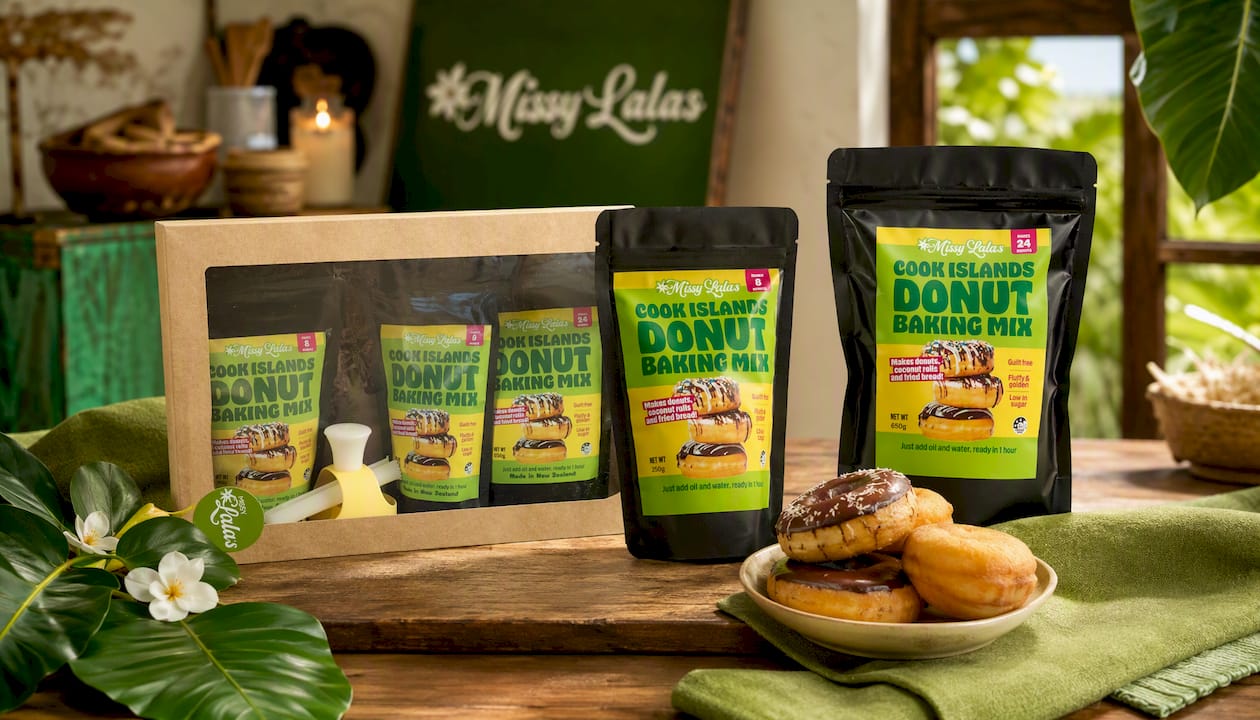
If a from-scratch dough feels like more than you’ve got time for on a weeknight, the Cook Islands Donut Baking Mix – 250g covers a single batch of around 12 rolls with just water and oil added, leaving you free to focus on getting the coconut sauce right. Planning a bigger gathering or baking for a birthday? The 650g mix scales the dough up cleanly for a double batch, and it’s the same mix behind Missy Lala’s Cook Islands donuts, so one bag covers more than one recipe in your rotation. For gifting or a big family bake up, the Island Memories Bundle pairs the mix with recipe cards, ready to hand over or keep on your own bench. Pick your size and get the dough started tonight.
Where these techniques come from
- King Arthur Baking’s pani popo recipe for sauce timing and bake temperature
- The Koko Samoa for cultural context and the signature pour
- Allrecipes and Ono Hawaiian Recipes for shortcut methods and timing checks
Sources
- Exploratorium Yeast and temperature guidance
- King Arthur Baking Pani Popo Samoan coconut buns
- The Koko Samoa Pani Popo recipe, history and tips
- Allrecipes Pani PoPo recipe
- Ono Hawaiian Recipes Pani Popo recipe and technique notes
FAQ
What are the ingredients for pani popo?
The dough needs flour, active dry yeast, sugar, salt, milk or water, and butter or oil. The coconut sauce needs full-fat coconut cream, sugar, and a thickener like cornstarch.
How long do you cook pani popo for?
Bake at 175°C (350°F) for 25 to 30 minutes, until the tops are golden and the sauce bubbles at the edges. The coconut sauce itself only needs 5 to 7 minutes on the stove beforehand to thicken slightly.
Can I make pani popo with condensed milk?
Some variations add a small amount of sweetened condensed milk to the coconut sauce for extra sweetness and richness, but full-fat coconut cream should still form the base, since condensed milk alone won’t set into the same custardy layer.
What does “pani popo” mean in English?
“Pani popo” translates roughly to “coconut buns” or “coconut bread” in Samoan, referring directly to the coconut cream sauce baked into the rolls.


