

30 Minute Donut Holes Recipe From Scratch or With Missy Lala Mix
Make fluffy donut holes in around 30 minutes using a no-yeast drop-fry batter, then finish with a glaze, cinnamon sugar, or a chocolate dip. Fried, no-yeast drop-batter donut holes give you the crispest exterior and softest crumb, and they only need a pot, a thermometer, and a cookie scoop. Glazing is the fastest way to finish any batch. Baked or air-fried versions trade a little crunch for far less oil and easier cleanup.
TL;DR:
- Overcrowding the fryer or adding too many donut holes at once can cause greasy results due to the oil temperature dropping below 160°C.
- Frying at the recommended temperature range of 160°C to 190°C ensures a cooked center without an oily shell, especially when using small scoops.
- Glazing donut holes while still warm creates a glossy shell that avoids sliding off; letting the glaze set takes about 10 to 15 minutes.
- Baked and air-fried versions produce softer, cake-like donut holes that require slightly longer cooling before glazing or finishing.
- Using a ready-made mix like Missy Lala’s Cook Islands Donut Baking Mix simplifies preparation and works across frying, baking, and air frying with minimal adjustment.
Table of Contents
- Fried donut holes (no-yeast drop-batter): the full quick recipe
- Glazed donut holes: a reliable glaze that won’t run
- Baked and air fryer donut holes: less oil, different texture
- Why donut holes turn out greasy, raw, or misshapen
- Using a Cook Islands Donut Baking Mix as a shortcut
- A quick note from the kitchen
- Where to buy Missy Lala baking mixes
- Sources
- FAQ
Fried donut holes (no-yeast drop-batter): the full quick recipe
Skip the yeast, skip the rolling pin. A drop-batter method is faster and more forgiving than rolled dough, which is why it’s become the standard for home cooks who want donut holes without proofing time. You mix a thick, pourable batter, scoop it straight into hot oil, and let the fryer do the shaping.
Ingredients (makes about 24 donut holes):
- 2 cups plain flour
- ¼ cup sugar
- 2½ teaspoons baking powder (this is what gives the fluff, no yeast needed)
- ½ teaspoon salt
- ½ teaspoon ground nutmeg or cinnamon (optional)
- ¾ cup milk or buttermilk (buttermilk gives a slightly tangier, more tender crumb)
- 1 egg
- 2 tablespoons melted butter
- Oil for frying (a neutral oil with a high smoke point, such as canola or rice bran oil)
Equipment checklist: a heavy pot or Dutch oven, a clip-on candy thermometer, a 1 to 2 tablespoon cookie scoop, a slotted spoon, and a wire rack set over a tray.
- Whisk the flour, sugar, baking powder, salt, and spice together in one bowl.
- In a second bowl, beat the milk, egg, and melted butter, then fold into the dry ingredients until just combined. Do not overmix, a few lumps are fine.
- Heat oil to between 160°C and 190°C, using the thermometer to check, not a guess. This range is the sweet spot most tested recipes rely on for a cooked centre without a greasy shell.
- Scoop the batter with the cookie scoop and drop gently into the oil, six to eight balls at a time.
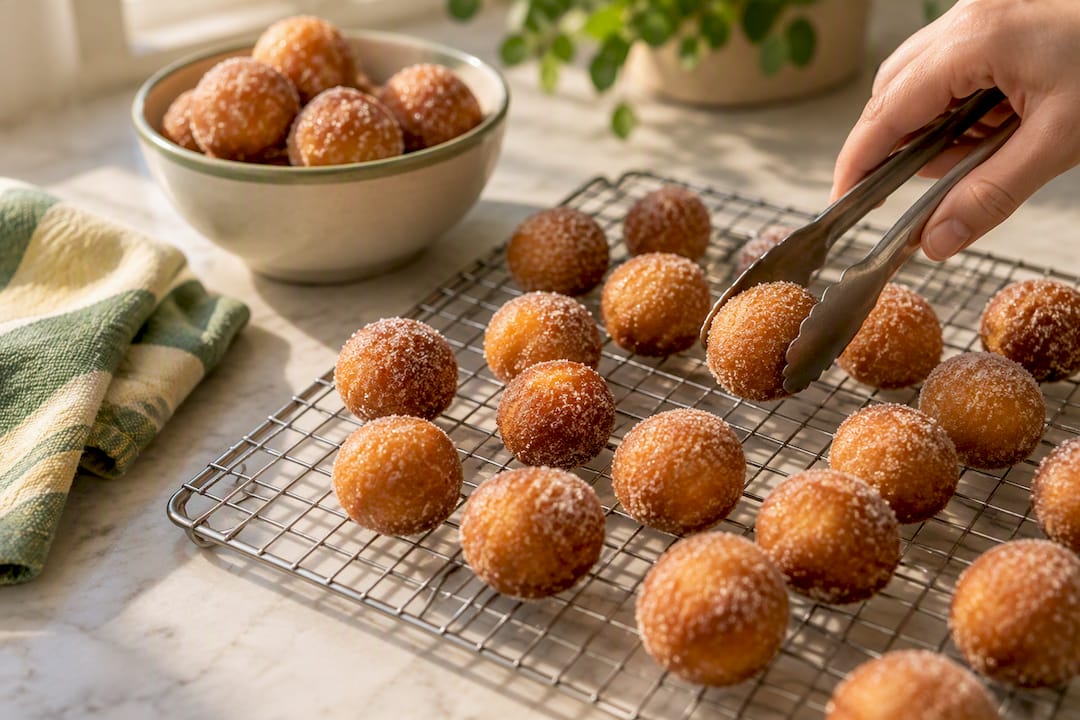
- Fry for a few minutes until deep golden all over, turning once, until deep golden all over.
- Lift out with the slotted spoon onto the wire rack to drain, not straight onto paper towel, which traps steam and softens the crust.
Quick variations: roll warm donut holes in cinnamon sugar, dust with powdered sugar once cooled, or use a piping tip to inject jam or custard after frying. If you’d rather skip measuring flour and baking powder from scratch, the Cook Islands Donut Baking Mix from Missy Lala works as a direct swap for the dry ingredients above, mixed with just water and oil.
Glazed donut holes: a reliable glaze that won’t run
A basic glaze is the fastest way to dress up a plain batch, but too many home bakers get the ratio wrong and end up with a puddle instead of a shell.
- Standard glaze: whisk 1½ cups icing sugar with 3 to 4 tablespoons of milk or water and a splash of vanilla. Start with less liquid, you can always loosen it, but a runny glaze never thickens back up.
- Dipping window: glaze donut holes while they’re still warm, around 40°C to 50°C, so the coating sets into a thin, glossy shell rather than sliding off.
- Setting time: let dipped donut holes rest on a wire rack for 10 to 15 minutes before stacking or boxing them, otherwise the glaze smears.
- Chocolate swap: melt ½ cup chocolate chips with 1 tablespoon oil or cream for a glossy dip that sets firmer than sugar glaze.
- Citrus swap: replace the milk in the standard glaze with fresh orange or lemon juice for a brighter, slightly tart finish.
- Storage note: glazed donut holes soften faster than plain ones because the glaze draws moisture from the crust, so eat them within a day for the best texture.
Dip only the top half if you want a cleaner finish with less mess, then set glaze-side up on the rack so it doesn’t stick.
Baked and air fryer donut holes: less oil, different texture
If you’d rather not deal with hot oil, both baked and air-fried donut holes get you a similar shape and flavour with a softer, cake-like bite instead of a crisp fried shell.
- Baked method: thin the batter slightly with an extra tablespoon of milk, spoon into a greased mini-muffin pan, and bake at 190°C for 8 to 10 minutes until a skewer comes out clean.
- Air fryer method: shape batter into balls with the cookie scoop, lightly spray the air fryer basket and the balls themselves, then cook at 180°C for 6 to 8 minutes, turning halfway through.
- Crisping trick: if the air-fried batch feels too soft, give it another 60 to 90 seconds at 200°C right at the end. That short blast of high heat is often enough to approach the crunch of a fried batch without adding any extra oil.
- Finishing: glaze or roll baked and air-fried donut holes the same way as fried ones, though wait an extra minute or two for them to cool since they hold heat longer in the centre.
Baked and air-fried versions suit weekday batches when you want the flavour without cleaning a pot of oil afterwards.
Why donut holes turn out greasy, raw, or misshapen
Most failed batches trace back to one thing: oil temperature. Dropping too many donut holes in at once cools the oil fast, and once it drops below around 160°C, the batter absorbs oil instead of sealing, which is exactly why overcrowding a fryer is the single biggest cause of greasy results.
- Greasy outside: oil was too cool or the batch was too crowded, fry in smaller groups of six to eight.
- Raw centre: oil was too hot on the outside before the middle cooked through, or the balls were scooped too large, stick to a level 1 to 2 tablespoon scoop.
- Uneven shapes: free-pouring batter from a spoon gives lopsided results, a cookie scoop gives consistent, round donut holes every time.
- Sticky scoop: batter clinging to the scoop ruins the shape before it even hits the oil.
Pro Tip: Spritz your cookie scoop with a light coat of cooking oil spray before every drop. It stops batter sticking and gives you a cleaner, rounder release into the pot.
Drain finished donut holes on a wire rack rather than paper towel so steam escapes instead of softening the crust. Store leftovers in an airtight container for up to two days, and re-crisp them in an air fryer or hot oven for two to three minutes rather than the microwave, which turns them soft and chewy.
Using a Cook Islands Donut Baking Mix as a shortcut
The Cook Islands Donut Baking Mix needs only water and oil, and it works across all four methods above with no recipe adjustment beyond frying time or oven temperature.
- Swap it in for the dry ingredients in the fried recipe, batch yield and timing stay roughly the same.
- Stir in vanilla, citrus zest, or melted butter for extra flavour before frying or baking.
- Works for drop-batter frying, baking, or air-frying without changing the mix itself.
A quick note from the kitchen
Donut holes are one of those bakes where confidence beats precision. Grab a cookie scoop and a thermometer, get your first batch in the oil, and the rest follows.
— Jasmin
Where to buy Missy Lala baking mixes
Missy Lala’s Cook Islands Donut Baking Mix cuts the ingredient list down to mix, water, and oil, so there’s no measuring flour, baking powder, and sugar separately before you even reach the frying pan.
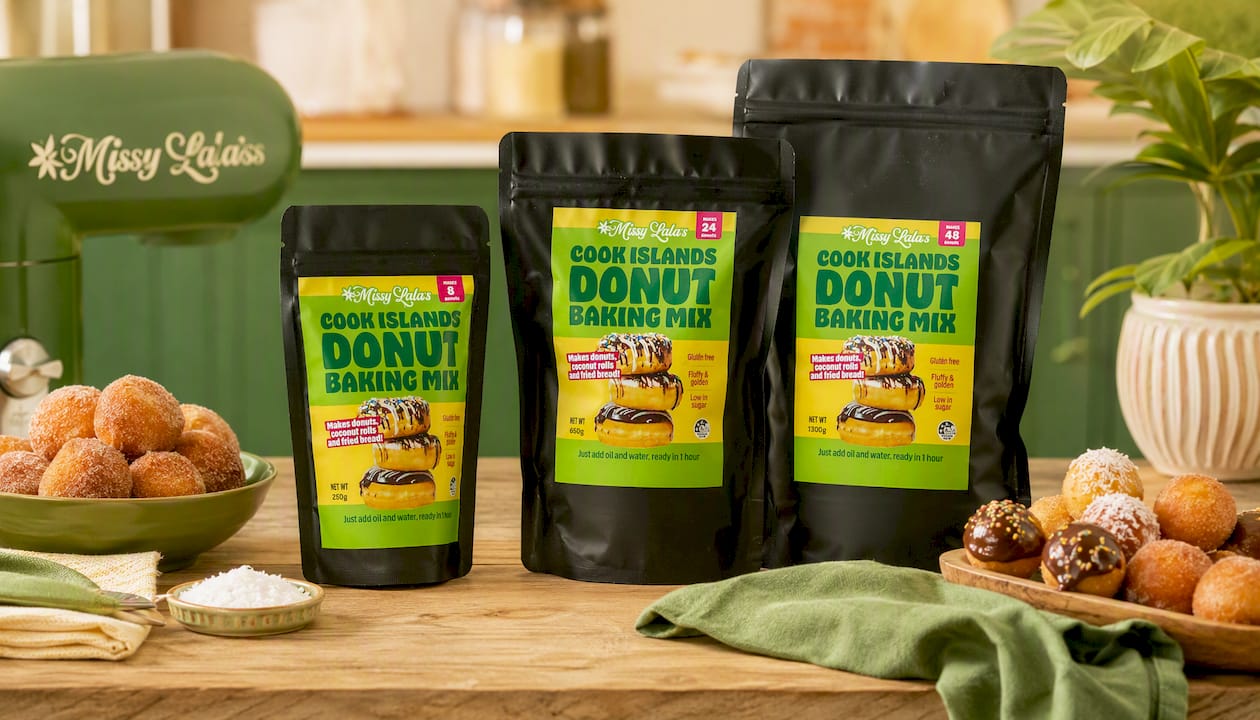
For a first try or a small household batch, the 250g pack is enough for one round of donut holes without leftovers sitting in the pantry. Regular bakers or small family gatherings tend to reach for the 650g pack, which stretches across a couple of batches. If you’re baking for an event, a fundraiser, or just want to keep extra mix on hand for weeks of casual baking, the 1300g pack gives you the most batches per dollar. Browse the full range on the donut mix collection page and pick the size that matches how often your household actually bakes.
Sources
- Donut Holes Recipe (Cake Donut Version) | The Kitchn
- Time to make doughnuts: temperature matters | ThermoWorks blog
- Fried donut holes may have started as the byproduct… | The Practical Kitchen
FAQ
What makes donut holes so fluffy?
Baking powder is the main driver in no-yeast recipes, it creates gas bubbles that expand the moment the batter hits hot oil. Buttermilk also helps by tenderising the crumb, giving you a lighter bite than water-based batters.
What’s the easiest donut hole recipe?
The drop-batter method is the easiest, mix a thick batter, scoop it straight into oil heated to 160°C to 190°C, and fry for 2 to 5 minutes per batch. It skips rolling, cutting, and proofing entirely, which is why it’s the go-to method for home cooks in a hurry.
How do you make Old Fashioned Donut Holes?
Old fashioned style donut holes use a cake batter similar to the drop-batter recipe above, often with a touch of sour cream or buttermilk for extra tang and a denser crumb. Fry them at the same 160°C to 190°C range, then finish with a thin vanilla glaze or plain sugar dust for that classic bakery look.
Can I bake donut holes instead of frying?
Yes, baking at 190°C for 8 to 10 minutes in a mini-muffin pan gives you a soft, cake-like donut hole with far less oil than frying. The texture is closer to a muffin than a crisp fried shell, so it suits cooks after convenience over crunch.
Does Missy Lala’s mix work for all these methods?
Yes, the Cook Islands Donut Baking Mix is designed to work across fried, baked, and air fryer methods with just water and oil added. Check the product collection for current pack sizes and pricing.


