

175–190°C frying: Best oil for frying donuts for home bakers
For most home bakers, a refined, high-oleic vegetable oil or shortening gives the best result: neutral flavour, a long fryer life, and a crisp, non-greasy shell that holds a glaze properly. Canola oil or refined peanut oil are the easiest everyday picks. If flavour is your priority over shelf life, lard or shortening wins instead. Keep the oil between 175°C and 190°C throughout the fry.
TL;DR:
- Using high-oleic oils like sunflower or canola provides better oxidation resistance and longer fryer life than standard oils, especially when frying multiple batches.
- Solid fats such as shortening or lard set on the donut surface, reducing greasiness and improving glaze adhesion, but they impart a distinct flavor that may not suit all preferences.
- Maintaining oil temperature between 175°C and 190°C and avoiding overcrowding are crucial for consistent, non-greasy donuts.
- Straining and properly storing cooled oil extends its usability and prevents off-flavors in subsequent fryings.
- For home baking, refined canola or peanut oil are practical, neutral choices, while lard or shortening are better for flavor-focused, rustic donuts.
Table of Contents
- Best oil for frying donuts: comparing your options
- Why oil choice changes how a donut turns out
- How to manage your frying oil at home
- Which oil should you actually buy?
- Getting the best results with Missy Lala’s donut mix
- What actually matters when you’re choosing an oil
- Ready to fry your own batch at home?
- Sources
- FAQ
Best oil for frying donuts: comparing your options
Every oil behaves differently once it hits frying temperature, and the differences show up directly in your donut. Some stay liquid and soak into the crumb. Others firm up on the surface and seal it. That single distinction, liquid versus semi-solid at room temperature, decides more about your finished donut than almost any other variable.
Vegetable shortening is a semi-solid fat, usually made from soybean or palm oil, that’s been partially hydrogenated or interesterified to stay firm at room temperature. It has a smoke point around 180°C to 200°C, a genuinely neutral flavour, and it sets on the donut’s surface as it cools. That setting behaviour is exactly why bakeries have used shortening for decades: it reduces greasiness and gives glaze something firm to cling to.
High-oleic liquid oils (usually sunflower or soybean varieties bred for a higher oleic acid content) sit at the sweet spot between shortening and standard vegetable oil. They pour and heat like a normal liquid oil, with smoke points around 190°C to 230°C, but they resist oxidation far better than standard polyunsaturated oils because they have fewer chemically vulnerable sites for oxygen to attack. Commercial bakeries increasingly use them for exactly that reason, and they’re becoming more common on supermarket shelves labelled simply “high-oleic sunflower oil” or “high-oleic canola oil”.
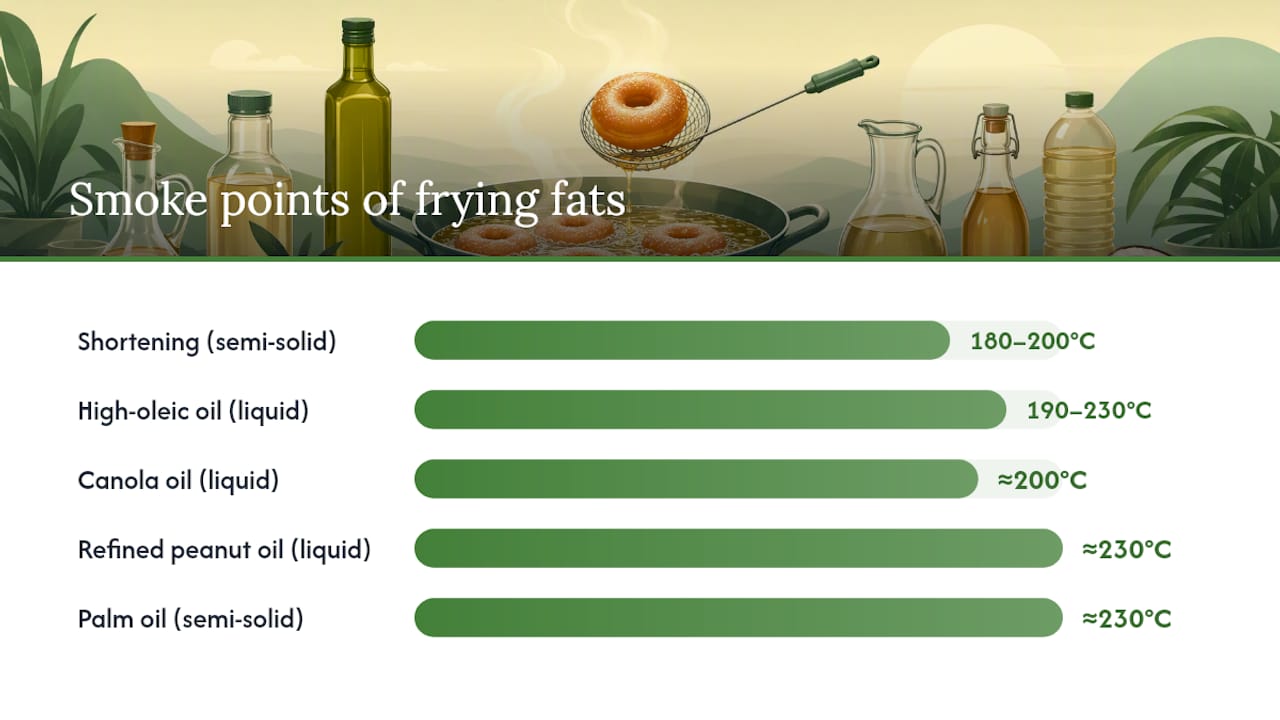
Canola oil is the default in most Australian and New Zealand pantries, and for good reason. It’s cheap, widely available, has a smoke point around 200°C, and carries almost no flavour of its own. Standard canola oxidises faster than the high-oleic version under repeated frying, so it’s best suited to occasional batches rather than a fryer you’re running all weekend.
Refined peanut oil has a high smoke point (around 230°C), a faint nutty background note, and genuinely excellent frying stability. It’s the oil professional doughnut shops reach for when they want flavour with performance. The catch is allergen risk. Skip it entirely if anyone eating your donuts has a peanut allergy.
Palm oil is semi-solid at room temperature, similar in behaviour to shortening, with a smoke point around 230°C and a neutral taste when refined. It’s one of the more shelf-stable options for repeated frying, though sustainability sourcing is worth checking on the label if that matters to you.
Cottonseed oil is a traditional commercial doughnut fat, valued for its clean flavour and reasonable stability, though it’s harder to find in home-cook packaging outside speciality suppliers.
Lard and tallow bring real flavour, a savoury, slightly rich note that some bakers genuinely prefer, plus excellent surface set and glaze adhesion. They’re not vegetarian, and the flavour crossover isn’t for everyone on a classic sugared donut.
A few shopping cues make label reading faster:
- Look for “refined” or “deodorised” on the label. Unrefined oils carry the original seed’s flavour and often can’t handle deep-frying heat.
- “High-oleic” on a canola or sunflower bottle signals better oxidation resistance, worth the small price premium if you fry often.
- Words like “frying oil” or “suitable for deep frying” on the packaging mean the manufacturer has tested it above 190°C.
- Solid fats (shortening, lard, tallow) come in blocks or tubs, not bottles. Check the softening point on the packaging if it’s listed.
Why oil choice changes how a donut turns out
A donut behaves like a sponge the moment it hits hot fat. As the dough’s surface moisture flashes off, the resulting structure pulls in a small amount of oil to fill the gaps left behind. How much oil gets absorbed, and how it sits once the donut cools, depends heavily on whether that oil is liquid or semi-solid at room temperature.
Hard fats and shortenings solidify on the donut’s surface as it cools, and that solidification is what stops a finished donut turning greasy or letting glaze slide straight off. Bake Magazine’s analysis of frying science confirms that more saturated fats set on the surface and hold toppings noticeably better than many liquid vegetable oils. A donut fried in straight canola and left to cool will feel oilier to the touch than one fried in shortening, even at identical frying times and temperatures.
Oil stability matters just as much, particularly if you’re frying more than one batch back to back. Every time oil heats past its smoke point or sits at frying temperature for extended periods, it oxidises. Oxidised oil turns darker, smells slightly rancid, and passes that flavour straight into your donuts. High-oleic oils resist this because they contain fewer of the chemically reactive double bonds that oxygen attacks, which is why Bake Magazine’s coverage of oil selection points to high-oleic formulations for longer fryer life and better finished flavour over repeated use.
None of this is trivial to the finished product. Frying oil can account for roughly a fifth to a quarter of a donut’s total weight once it’s cooled, according to Cargill’s donut frying research, which means the oil you choose isn’t a minor ingredient. It’s close to a quarter of what you’re actually eating.
How to manage your frying oil at home
Getting consistent results comes down to temperature discipline more than any single oil choice. Here’s the practical routine:
- Heat the oil to 175°C to 190°C before the first donut goes in, using a clip-on candy thermometer or a countertop fryer with a built-in gauge. This range sets the crust fast enough to limit oil absorption, while still cooking the centre through in the two to three minutes most donuts need per side.
- Fry in small batches, no more than three or four donuts at a time in a standard pot. Overcrowding drops the oil temperature sharply, and a slow recovery back to frying heat is exactly when donuts soak up excess oil.
- Skim between batches. Use a fine mesh spider or slotted spoon to lift out crumbs and loose dough bits after each batch. Left in the oil, they burn and taint every subsequent fry.
- Let the oil recover to your target temperature between batches rather than dropping donuts in the moment it’s close. A minute or two of patience here does more for texture than any oil upgrade.
- Watch colour and smell across a frying session. Oil that’s darkened noticeably, smells sharp or bitter, or has started foaming persistently is past its useful life and should be replaced rather than reused.
Commercial fryers get tested regularly for TPM and free fatty acid (FFA) levels to know precisely when oil needs changing. Home cooks can’t run those tests, but Cargill’s frying research notes that visual checks, skimming, and small-batch filtering replicate the important parts of that discipline without the lab equipment.
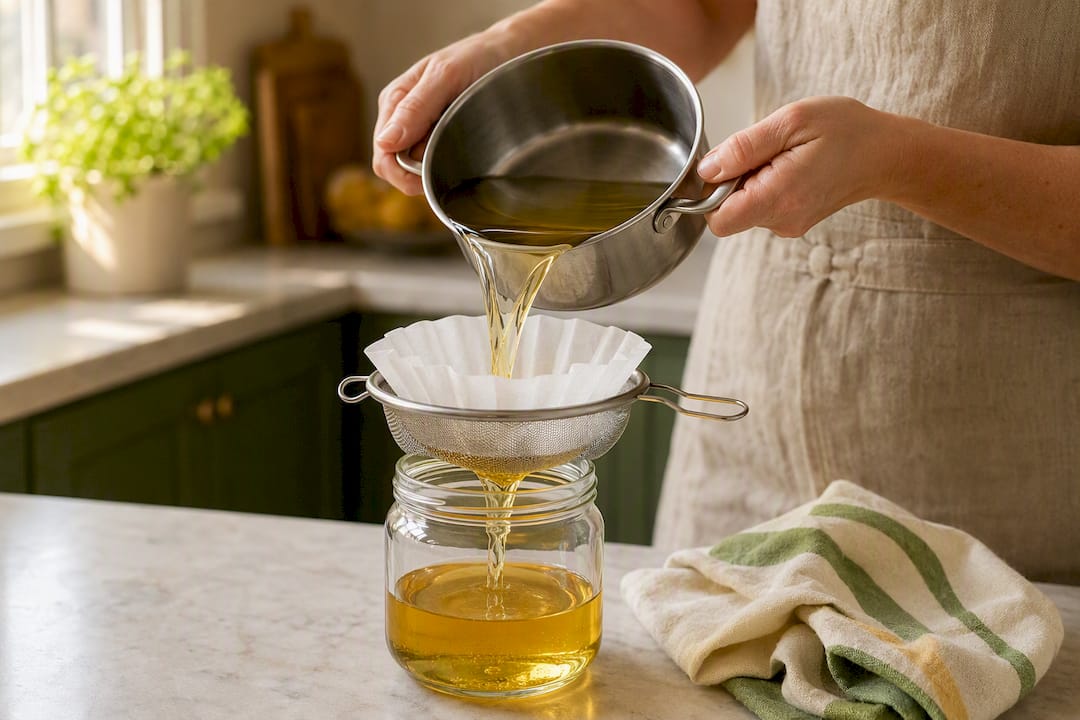
Pro Tip: Strain your oil through a fine sieve lined with a coffee filter once it’s cooled after a frying session, then store it in a sealed jar away from light. Filtered, properly stored oil can usually go through at least one more frying session before it needs replacing, which stretches your oil budget without hurting donut quality.
Which oil should you actually buy?
If you fry donuts occasionally and want one bottle that does the job without fuss, refined canola oil or refined peanut oil is the sensible everyday pick. Both are neutral enough to let the dough and glaze carry the flavour, both are widely stocked, and both handle the 175°C to 190°C range comfortably.
If flavour matters more to you than convenience, lard or shortening is worth the switch. The trade-off is a heavier, more savoury note that changes the eating experience, so it suits rustic or old-fashioned style donuts better than a delicate glazed ring.
For the longest fryer life, particularly if you’re frying for a family gathering or a market stall and running several batches back to back, high-oleic sunflower or canola oil earns its slightly higher price. It resists breakdown far longer than standard canola under repeated heating, per the Bake Magazine research on high-oleic stability.
Quick shopping checklist:
- Choose “refined” or “deodorised” on the label, never a cold-pressed or virgin version.
- Look for “high-oleic” if you plan to fry more than two or three batches from the same oil.
- Vegan and vegetarian bakers should stick with canola, peanut, palm, or shortening made from vegetable fats rather than lard or tallow.
- Avoid extra virgin olive oil and unrefined coconut oil entirely. Both have smoke points too low for deep frying and will scorch before your donuts cook through, a point WebstaurantStore’s frying oil guide makes clearly.
Getting the best results with Missy Lala’s donut mix
Missy Lala’s Cook Islands Donut Baking Mix is built around a simple water-and-oil formula, which means the oil you add to the dough, and the oil you fry in, both shape the final texture. A neutral liquid oil in the mix itself keeps the dough soft without introducing competing flavours, so canola or a mild vegetable oil works well as the mixed-in fat.
For frying, the same rules from earlier apply directly. If you’re using a solid shortening in your fryer, give the donuts an extra thirty seconds or so per side, since shortening holds heat slightly differently than a liquid oil once donuts are added. With a liquid oil, stick to the standard timing and watch for that golden colour as your cue. For more detail on getting consistent results with a box mix, Missy Lala’s own guide on improving box donut mix texture covers the finer points.
What actually matters when you’re choosing an oil
Most advice on frying oil gets fixated on smoke point, as though the highest number automatically wins. It doesn’t. A donut fried in an oil with a sky-high smoke point but poor surface set will still turn greasy if the fat stays liquid at room temperature. Smoke point tells you when an oil starts to break down, not whether your donut will hold its glaze.
The bigger factor conventional advice glosses over is what happens to the oil after frying, whether it solidifies on the donut’s surface or stays liquid inside it. That’s the difference between a donut that feels light in your hand an hour later and one that’s left an oily patch on the paper towel underneath it. Home bakers chasing a bakery-quality result should prioritise that behaviour over chasing the highest smoke point on the shelf.
My honest read: buy one bottle of high-oleic canola or sunflower oil, keep a tub of shortening on hand for when flavour and glaze hold matter more, and stop treating oil choice as an afterthought. It’s a bigger lever on the final donut than the recipe itself.
— Jasmin
Ready to fry your own batch at home?
A Cook Islands Donut Baking Mix takes the guesswork out of the dough side of the equation, so the oil decisions above are the only real choices left to make. The 250g pack suits a first-time trial or a single household batch, the 650g pack fits regular weekend baking or a small gathering, and the 1300g pack gives the best value per batch for events or larger families.
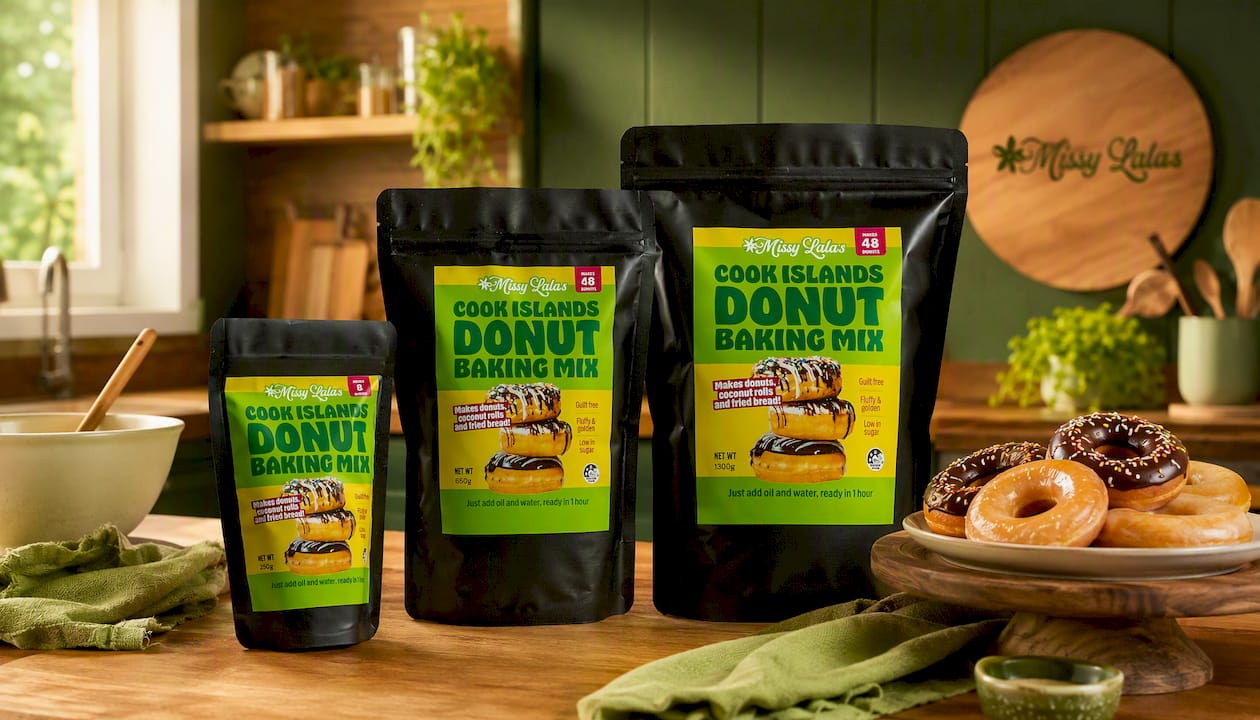
Pair any pack with a refined, high-oleic liquid oil for the most reliable everyday result, or switch to shortening when you want a firmer glaze finish. Head to the full range of Cook Islands Donut Baking Mix and pick the pack size that matches how much you’re planning to bake.
Sources
Technical claims on oil stability and frying science come from Bake Magazine’s donut frying research, its oil selection coverage, and Cargill’s donut frying insights report. For hands-on technique, see Missy Lala’s guide on mastering doughnut baking mix.
- The science of frying donuts | Bake Magazine
- Donut Frying Insights | Cargill (pdf)
- The best oil for frying donuts | WebstaurantStore blog
FAQ
What oil does Krispy Kreme use to fry its donuts?
Krispy Kreme has not published the specific oil blend it uses, but large commercial donut operations typically rely on vegetable shortening or high-oleic oils for their combination of neutral flavour and long fryer life.
What’s a healthy oil to use for frying donuts?
Canola and high-oleic sunflower oil are among the better everyday choices, since they’re lower in saturated fat than shortening or lard while still handling frying temperatures well; no frying oil is genuinely “healthy” given the quantity absorbed, but these options are a reasonable middle ground.
What oil does Dunkin’ use for its donuts?
Dunkin’ has not made its exact oil supplier or blend public information, and it can vary by region and franchise.
Can I use olive oil to deep-fry donuts?
Standard or extra virgin olive oil isn’t suited to deep frying donuts because its smoke point sits too low for the 175°C to 190°C range donuts need, and it will impart a flavour most donut recipes aren’t built for; refined oils remain the practical choice for deep frying, as covered in WebstaurantStore’s frying oil breakdown.
What’s the best oil for frying donuts made from a baking mix?
A refined, high-oleic canola or sunflower oil works well with mixes like Missy Lala’s Cook Islands Donut Baking Mix, giving a neutral flavour that lets the dough and glaze come through while keeping the fryer stable across multiple batches.


